

Pulse Pressure: The Gap Between Your Blood Pressure Numbers
Pulse pressure is a number hidden in plain sight in every blood pressure reading — the gap between the top and bottom figures. A reading of 120/80 has a pulse pressure of 40. It’s rarely mentioned at a check-up, yet it can reveal something the two numbers alone don’t: how stiff or flexible your arteries are, and a slice of your heart-health risk. This guide explains what pulse pressure is, how to work it out, and what a wide or narrow gap means.
What is pulse pressure?
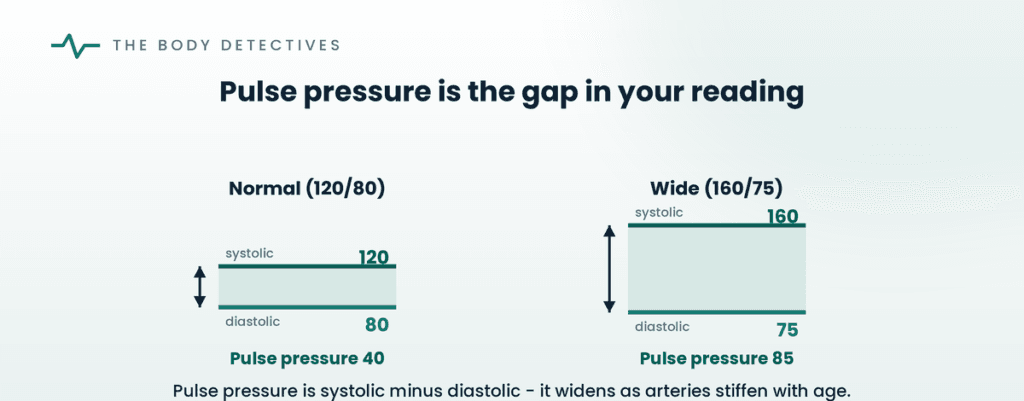
Pulse pressure is simply your systolic blood pressure (the top number) minus your diastolic (the bottom number). If your blood pressure is 120/80, your pulse pressure is 40 mmHg. It reflects the force your heart generates with each beat and how well your large arteries cope with that surge — stretching to absorb it, then recoiling between beats. For more, Cleveland Clinic is a reliable source.
How to read pulse pressure
Seeing it laid out makes it click:
A normal pulse pressure is around 40 mmHg, and roughly 40 to 60 is considered healthy. The key point is that two people with very different readings — say 120/80 and 140/100 — can share the same pulse pressure of 40, yet a widening gap tells its own story about the arteries.
Pulse pressure chart
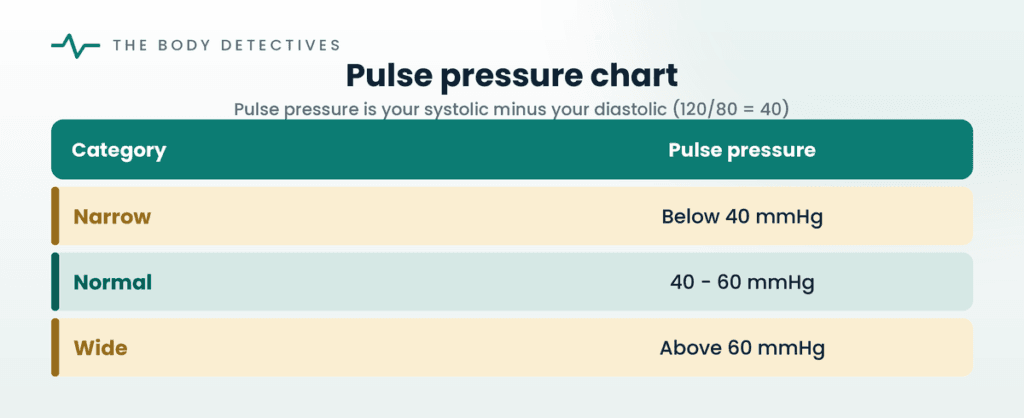
Here’s how the numbers are generally grouped:
These bands are a guide rather than strict cut-offs, and a single reading matters less than your usual pattern over time.
What a wide pulse pressure means
A wide pulse pressure — above about 60 mmHg — is most often a sign of stiffening arteries, which is a natural part of ageing. As the large arteries lose their elasticity, the systolic number climbs while the diastolic stays flat or falls, widening the gap. It’s worth taking seriously, because a consistently wide pulse pressure is an independent marker of cardiovascular risk, especially after age 50. Less common causes include an overactive thyroid and significant anaemia.
What a narrow pulse pressure means
A narrow pulse pressure — below about 40 mmHg — points the other way: the heart may be pumping out less blood with each beat. While it can simply reflect a low overall blood pressure, a genuinely narrow gap can occur with heart failure, a stiff or narrowed aortic valve, or significant blood or fluid loss. A new, persistently narrow pulse pressure is worth getting checked.
Can you change your pulse pressure?
To a degree, yes — by looking after your arteries. The same habits that help blood pressure also keep arteries supple: regular aerobic exercise, a diet lower in salt, a healthy weight, and not smoking. Interestingly, very fit endurance athletes can have a wide pulse pressure simply because their hearts pump a large volume with each beat — in them, it isn’t a worry. Context, as ever, matters.
When to see a doctor
Pulse pressure isn’t something to track obsessively, but if your readings consistently show a wide gap (over 60) or a narrow one (under 40) — particularly alongside symptoms like breathlessness, dizziness, chest discomfort, or swelling — mention it to your doctor. They’ll interpret it as part of your overall blood pressure picture and heart-health assessment, not in isolation.
The bottom line
Pulse pressure is the often-overlooked third number in your blood pressure reading — the gap between systolic and diastolic. Around 40 mmHg is normal; a persistently wide gap usually reflects stiffening arteries and carries real cardiovascular meaning, while a narrow gap can signal a struggling pump. It’s a simple subtraction that adds a useful extra layer to understanding your heart and arteries.
This article is for general educational purposes only and is not a substitute for professional medical advice. Always consult your own doctor about your blood pressure and heart health. See our Medical Disclaimer for more information.