Cholesterol Levels Chart: LDL, HDL, and Triglycerides Explained
A cholesterol test gives you four numbers — and most people have no idea which ones they want high and which they want low. (Yes, one type is actually good for you.) So what is a healthy cholesterol level, what do LDL, HDL, and triglycerides mean, and when should your numbers worry you? Let’s decode your lipid panel.
What is cholesterol?
Cholesterol is a waxy, fat-like substance your body needs to build cells and make hormones. Your liver produces all you need, and you also get some from food. The problem isn’t cholesterol itself — it’s the balance between the different types that travel through your blood. A standard cholesterol (lipid) test measures total cholesterol, LDL, HDL, and triglycerides.
Cholesterol levels chart
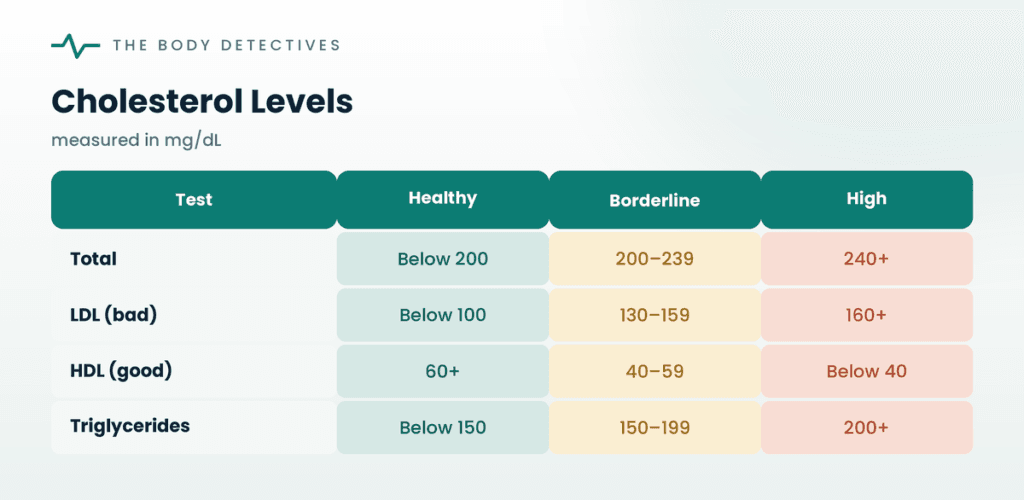
Here’s a general guide for healthy adults, measured in mg/dL. Remember that HDL is the exception — with HDL, higher is better:
| Test | Healthy | Borderline | High / risk |
|---|---|---|---|
| Total cholesterol | Below 200 | 200–239 | 240 or above |
| LDL (“bad”) | Below 100 | 130–159 | 160 or above |
| HDL (“good”) | 60 or above | 40–59 | Below 40 |
| Triglycerides | Below 150 | 150–199 | 200 or above |
Many countries report cholesterol in mmol/L instead. As a rough guide, a total cholesterol below 200 mg/dL is about 5.2 mmol/L, an LDL below 100 is about 2.6 mmol/L, and triglycerides below 150 is about 1.7 mmol/L. Your ideal targets also depend on your personal heart-disease risk — people at higher risk are given lower goals.
LDL — the “bad” cholesterol
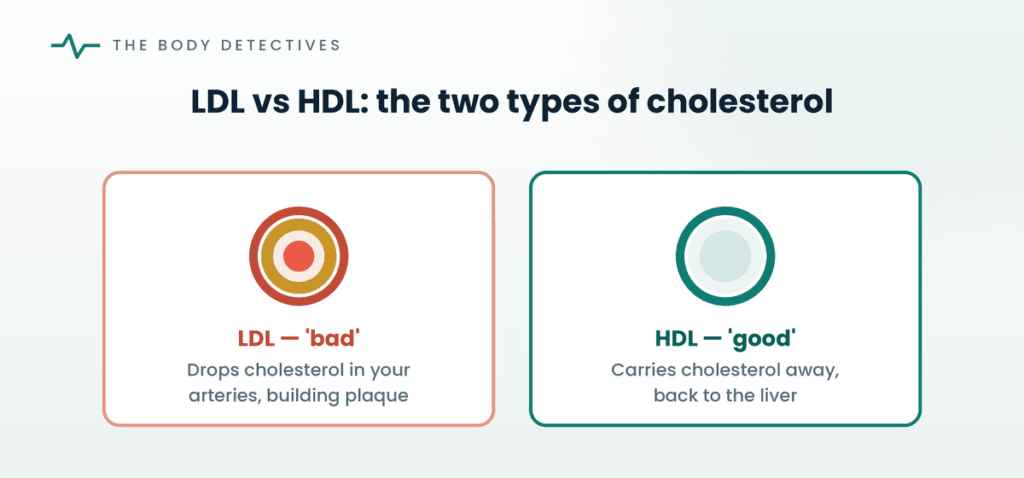
LDL (low-density lipoprotein) carries cholesterol to your arteries, where too much can build up into plaque, narrowing the vessels and raising your risk of heart attack and stroke. This is why, with LDL, lower is better. It’s usually the number doctors focus on most when deciding whether treatment is needed.
HDL — the “good” cholesterol
HDL (high-density lipoprotein) does the opposite job: it helps carry cholesterol away from your arteries and back to the liver to be removed. Because it’s protective, a higher HDL is better, and a low HDL is considered a risk factor. Exercise, not smoking, and a healthy diet all help raise it.
Triglycerides
Triglycerides are a type of fat your body stores for energy. High levels are linked to excess calories, sugar, and alcohol, as well as being overweight or having conditions like type 2 diabetes. Raised triglycerides often travel with low HDL, and together they’re an important warning sign for your heart and metabolism.
What does high cholesterol mean?
Like high blood pressure, high cholesterol usually causes no symptoms at all — which is exactly why it’s dangerous. Over years, a high LDL quietly builds plaque in your arteries, raising the risk of heart attack and stroke. A blood test is the only way to know your numbers, which is why regular checks matter, especially if heart disease runs in your family.
How to improve your cholesterol
- Cut back on saturated and trans fats (fatty and processed meats, fried foods, baked goods).
- Eat more fibre, vegetables, oats, nuts, and oily fish.
- Exercise regularly and maintain a healthy weight.
- Stop smoking and limit alcohol.
- If lifestyle changes aren’t enough, your doctor may recommend medication such as a statin — especially if your risk is high.
When should you see a doctor?
Have your cholesterol checked at the intervals your doctor recommends, and sooner if you have a family history of high cholesterol or early heart disease. If your numbers are out of range, your doctor will look at your overall heart-disease risk — not just one value — before advising on treatment. Cholesterol and blood pressure are the two big “silent” risk factors for your heart, so it’s worth reading our guide to blood pressure by age as well.
The bottom line
Your cholesterol panel is really a balance: you want a low LDL, a high HDL, and low triglycerides. Because high cholesterol is silent, a simple blood test is the only way to know where you stand — and a mix of healthy habits (plus medication when needed) can bring your numbers back into a safe range.
This article is for general educational purposes only and is not a substitute for professional medical advice. Always consult your own doctor about your personal health. See our Medical Disclaimer for more information.
For more, see the American Heart Association‘s information on cholesterol.