Kidney Function Test: Creatinine and eGFR Explained
A kidney function test is one of the most common checks on a routine blood panel, yet two of its key numbers — creatinine and eGFR — confuse almost everyone. The good news is they’re easier to understand than they look. Here’s what a kidney function test actually measures, what your results mean, and when a number is worth worrying about.
What is a kidney function test?
Your kidneys are two bean-shaped organs that filter waste and extra fluid out of your blood. A kidney function test is a simple blood test that estimates how well that filtering is working. It mainly looks at two things: the level of a waste product called creatinine, and a calculated score called eGFR. Together they give your doctor a quick picture of your kidney health.
Creatinine
Creatinine is a waste product made by your muscles every day. Healthy kidneys clear it from your blood, so the amount left behind reflects how well they’re filtering. A typical range is roughly 0.6–1.2 mg/dL, though it varies with sex, age, and muscle mass (more muscle naturally means a bit more creatinine). On its own it’s a clue, not a verdict — which is why doctors also use eGFR.
eGFR — the main number
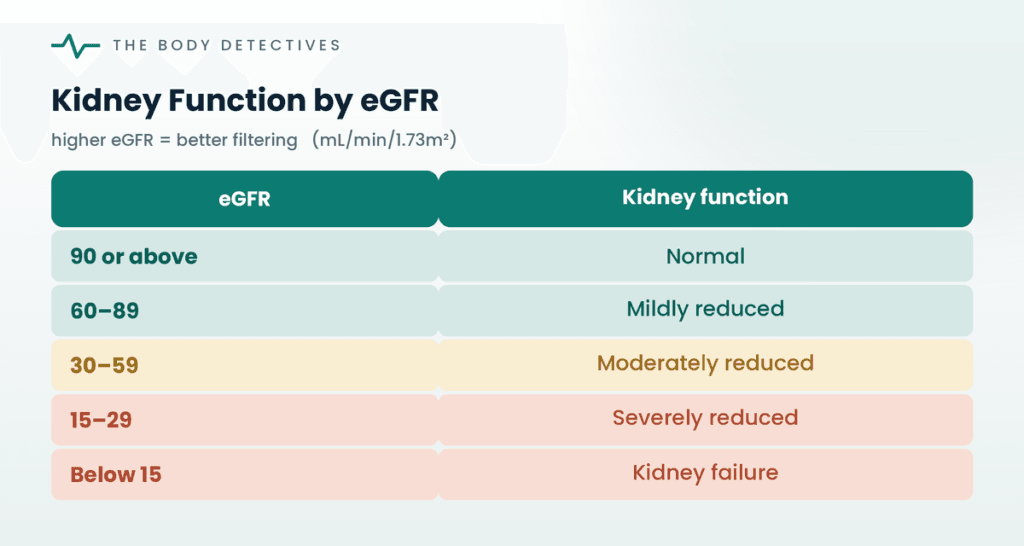
eGFR (estimated glomerular filtration rate) is calculated from your creatinine along with your age and sex, and it’s the number doctors rely on most. The key rule is simple: a higher eGFR is better. A value of 90 or above is considered normal kidney function, while lower numbers point to reduced filtering, as shown below.
Why creatinine and eGFR move in opposite directions
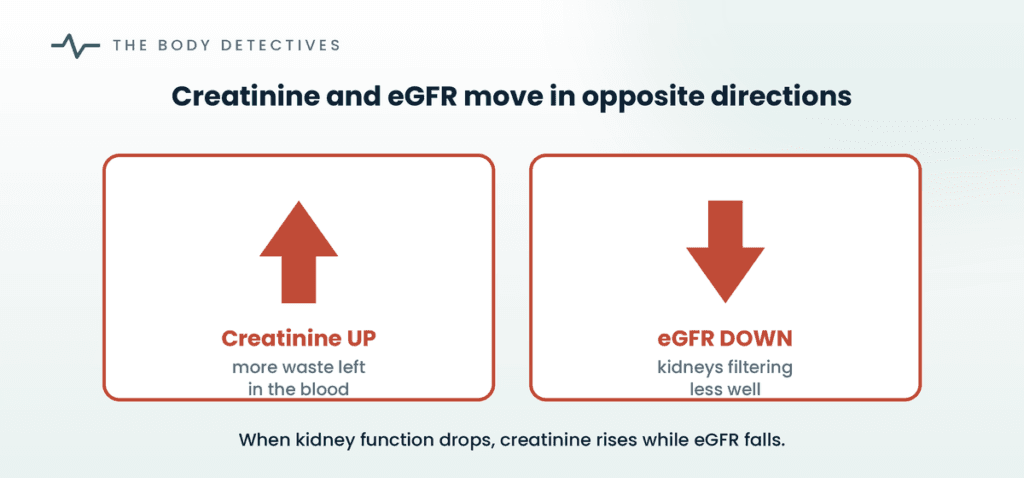
This is the part that trips people up. Because creatinine is waste that healthy kidneys remove, when filtering slows down the creatinine rises while the eGFR falls. So a high creatinine and a low eGFR are really telling you the same story from two directions: the kidneys are clearing less than they should. One abnormal reading can also be temporary — dehydration, for example, can nudge creatinine up briefly — so doctors look at trends over time, not a single test.
What causes reduced kidney function?
The two biggest causes worldwide are diabetes and high blood pressure, which slowly damage the kidneys’ tiny filters over years. Other factors include ageing, dehydration, repeated use of certain painkillers (like high-dose NSAIDs), and some other medical conditions. This is why keeping your blood sugar levels and blood pressure in a healthy range is one of the best things you can do for your kidneys.
The symptoms are often silent
Early kidney trouble usually has no symptoms at all, which is exactly why these blood tests matter. As function drops further, some people notice swelling in the legs or ankles, tiredness, foamy urine, or changes in how often they pass urine. Because the early stages are silent, abnormal blood results are often the first and only warning sign.
How to protect your kidneys
The basics are powerful: keep your blood sugar and blood pressure well controlled, stay well hydrated, eat a balanced diet that isn’t too high in salt, stay active, avoid smoking, and don’t overuse over-the-counter painkillers. For a reliable overview of kidney health, see the NHS guidance on kidney disease.
When should you see a doctor?
See your doctor if your eGFR is below 60 or your creatinine is above the normal range, especially if it’s a new change or you have diabetes or high blood pressure. Also get checked if you notice persistent swelling, unusual tiredness, or changes in your urine. A single mildly abnormal result isn’t a diagnosis, but it is a reason to follow up and repeat the test.
The bottom line
A kidney function test uses creatinine and eGFR to show how well your kidneys are filtering — and the simple rule is that a higher eGFR is better, while a rising creatinine is not. Most early kidney problems are silent, so these numbers are a valuable early warning. If yours are outside the normal range, don’t panic over one result, but do follow up with your doctor.
This article is for general educational purposes only and is not a substitute for professional medical advice. Always consult your own doctor about your personal health. See our Medical Disclaimer for more information.