Haemoglobin: What a Low Level Really Means
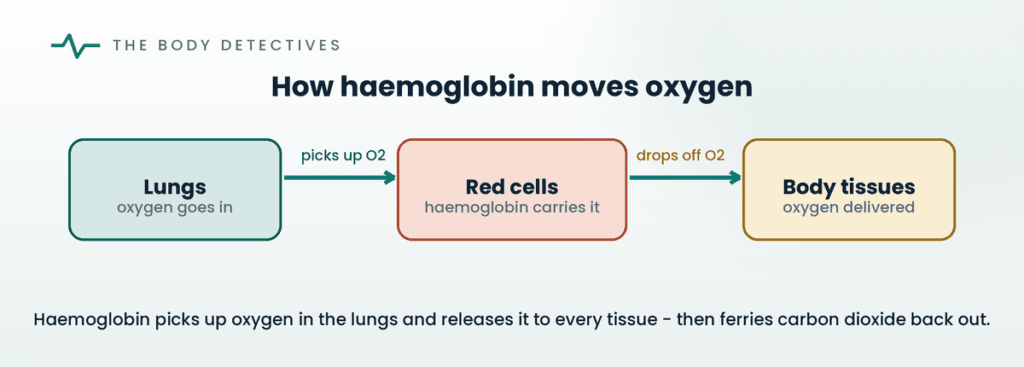
Haemoglobin is the iron-rich protein packed inside your red blood cells that carries oxygen from your lungs to every tissue in your body — and it is one of the most useful single numbers on any blood test. (You will also see it spelled hemoglobin, the American version of the same word.) When it runs low, the condition is called anaemia, and you may feel tired, weak, dizzy or short of breath. But here is the part most people miss, and the part that matters most: a low haemoglobin is not a diagnosis in itself. It is a clue. The real question a doctor always asks next is why.
Free tool
Want to check your iron stores?
Enter your ferritin result. Our free Ferritin Interpreter shows whether your iron stores are low, normal or high, using ranges adjusted for your sex, and gives you the questions to ask your doctor.
Open the Ferritin Interpreter →Educational only, not a diagnosis.
What haemoglobin actually does
Every red blood cell is essentially a tiny bag stuffed with haemoglobin. As blood flows through your lungs, each haemoglobin molecule grabs oxygen; as it reaches your tissues, it lets that oxygen go where it is needed and picks up carbon dioxide to carry back out. This is why haemoglobin is measured on almost every routine blood test, usually as part of a full blood count (also called a complete blood count, or CBC). It is a direct readout of your blood’s ability to move oxygen around — and oxygen is what keeps every organ working.
What the numbers mean
Normal haemoglobin depends on your sex and varies a little between laboratories, but a common guide is roughly 14.0–17.5 g/dL for men and 12.3–15.3 g/dL for women, according to the Cleveland Clinic. Anything below your lab’s range counts as anaemia. Levels above the range are less common and can reflect something as simple as dehydration — which just concentrates the blood — or smoking, living at high altitude, or, less often, a condition that makes the body overproduce red cells. Because the exact cut-offs differ, always read your result against the reference range printed on your own report.
A low haemoglobin is a sign, not a diagnosis
This is where a doctor’s thinking really counts. Anaemia tells you the oxygen-carrying capacity is down; it does not tell you why — and the why can range from trivial to important. The most common cause worldwide is iron deficiency, often showing up first as low iron stores, because your body cannot build enough haemoglobin without iron. A shortage of vitamin B12 or folate can do the same, since those vitamins are needed to make healthy red cells. Blood loss — from heavy periods, or slow bleeding somewhere in the gut — quietly drains both iron and haemoglobin. And longer-term illnesses, from kidney disease to chronic inflammation, can lower it too.
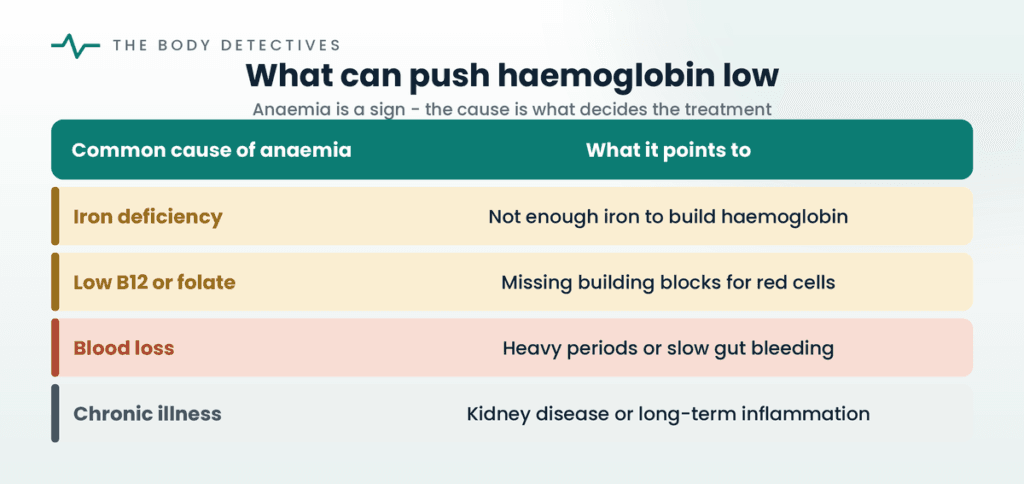
The reason this matters is simple: the fix for each cause is completely different. Iron-deficiency anaemia needs iron; B12-deficiency anaemia needs B12; anaemia from bleeding needs the bleeding found and stopped. Treating the number without finding the cause is guessing — which is exactly why a low haemoglobin should lead to a conversation with your doctor, not a self-prescribed supplement.
When to see a doctor
If a blood test shows your haemoglobin is low, see your doctor to find out why rather than reaching straight for iron tablets — taking iron you do not actually need can cause its own problems and can mask the real cause. Book an appointment promptly if you feel persistently tired, weak, breathless on mild effort, or notice unusual paleness, a pounding heartbeat, or dizziness. And treat some things as more urgent: black or bloody stools, vomiting blood, very heavy periods, or breathlessness even at rest all deserve prompt medical attention, because they can point to active blood loss.
The bottom line
Haemoglobin is your blood’s oxygen carrier, and one of the most informative numbers on a routine blood test. A low result — anaemia — is common and usually very treatable, but it is a starting point, not the answer. The real work is finding the cause, because that is what decides the fix. So if your haemoglobin comes back low, do not guess: let your doctor trace it back to its source.
This article is for general educational purposes only and is not a substitute for professional medical advice, diagnosis or treatment. Reference ranges vary between laboratories, so always interpret your result against your own report and discuss it with your doctor. If you have symptoms of anaemia or any signs of bleeding, seek medical advice. See our Medical Disclaimer for more information.