Vitamin E: The Antioxidant That Was Oversold
Vitamin E was, for a while, the vitamin that promised everything. As a powerful antioxidant, it was sold as protection against heart disease, cancer and even ageing itself — and millions reached for high-dose capsules on the strength of that promise. The reality, uncovered by large trials, turned out to be far more modest, and in places even cautionary. Vitamin E is genuinely useful and genuinely essential, but it is a nutrient you almost certainly already get enough of, and one where the supplement bottle can do more harm than good. Here is what vitamin E really does, and why food beats capsules.
What vitamin E does
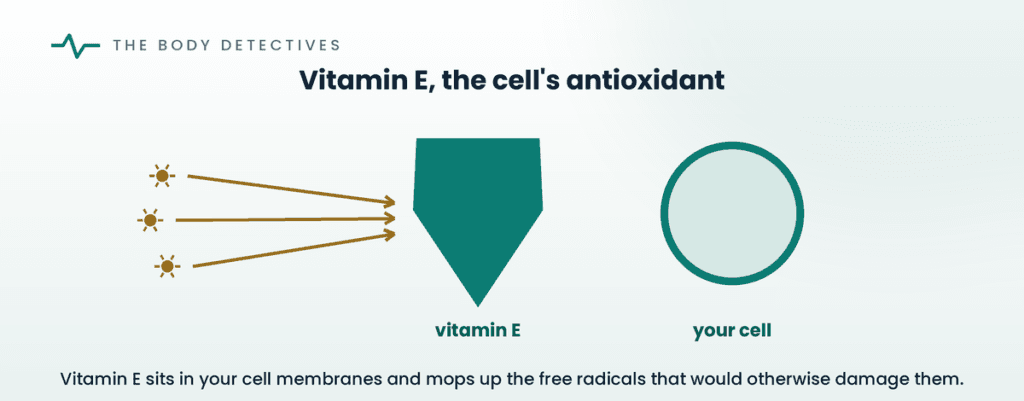
Vitamin E is a fat-soluble antioxidant — its main job is to sit within the fatty membranes of your cells and neutralise “free radicals”, the reactive molecules that would otherwise damage them. In doing so it helps protect your cells, supports your immune system, and has a mild effect on keeping blood from clotting inside your vessels. Like vitamin A and vitamin D, it is fat-soluble, so it is absorbed alongside dietary fat and stored in the body. The diagram below shows its antioxidant role.
The antioxidant that was oversold
This is where expectation and evidence part ways. Because vitamin E mops up the kind of oxidative damage linked to heart disease and cancer, it seemed obvious that taking more would help prevent them. But when that idea was put to the test in large trials, the supplements simply did not deliver — they were shown neither to prevent heart disease nor to lower cancer risk. Worse, high doses carried hazards of their own. The chart below separates the familiar claims from what the research actually found.
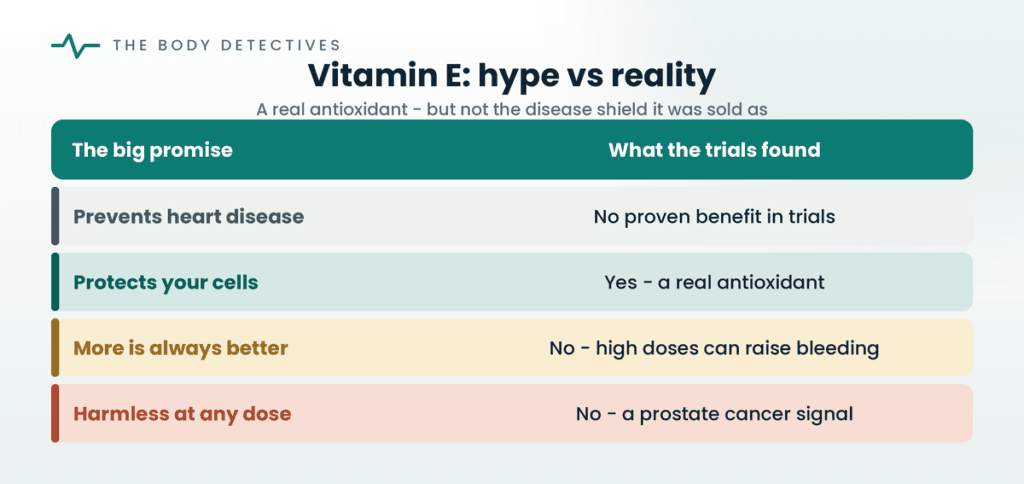
The safety signals are the part worth remembering. Because vitamin E gently thins the blood, high-dose supplements can raise the risk of bleeding, including bleeding strokes; and one large study found that men taking 400 IU a day had a higher risk of prostate cancer. None of this applies to the vitamin E in food — it is specifically the concentrated, high-dose capsules that carry the concern.
When to see a doctor
For almost everyone, vitamin E needs no thought at all: a handful of nuts or seeds, a little vegetable oil and some greens, and you are comfortably covered. A small handful of almonds alone provides a good share of the 15 mg an adult needs in a day, which is why real deficiency is very rare — mostly limited to people who cannot absorb fat properly, as happens in some bowel and pancreatic conditions. Worth a word with your doctor are numbness, tingling or muscle weakness that could point to a genuine shortage, or any plan to take high-dose vitamin E — particularly if you take a blood thinner such as warfarin, are heading for surgery, or have had a bleeding problem, since the effects can add up. Food first is, once again, the safe default.
The bottom line
Vitamin E is a real and useful antioxidant, but it is not the shield against disease it was once marketed as. You almost certainly get all you need from an ordinary diet, deficiency is rare, and the high-dose capsules that were meant to be an insurance policy have failed the test — and can, in large amounts, raise the risk of bleeding. Eat your nuts, seeds and greens, and leave the megadose bottle on the shelf.
This article is for general educational purposes only and is not a substitute for professional medical advice, diagnosis or treatment. If you have symptoms such as numbness or muscle weakness, take a blood-thinning medicine, or are considering high-dose supplements, speak to your own doctor first. See our Medical Disclaimer for more information.