Calcium Levels: What Your Blood Test Means
Your calcium levels do far more than build strong bones — calcium also keeps your heart, muscles, and nerves working, which is why your body guards its blood level so carefully. A calcium blood test is a common part of routine check-ups, and this guide explains what your result means, what high and low levels suggest, and an important catch: a normal blood calcium doesn’t actually tell you how strong your bones are.
What is a calcium blood test?
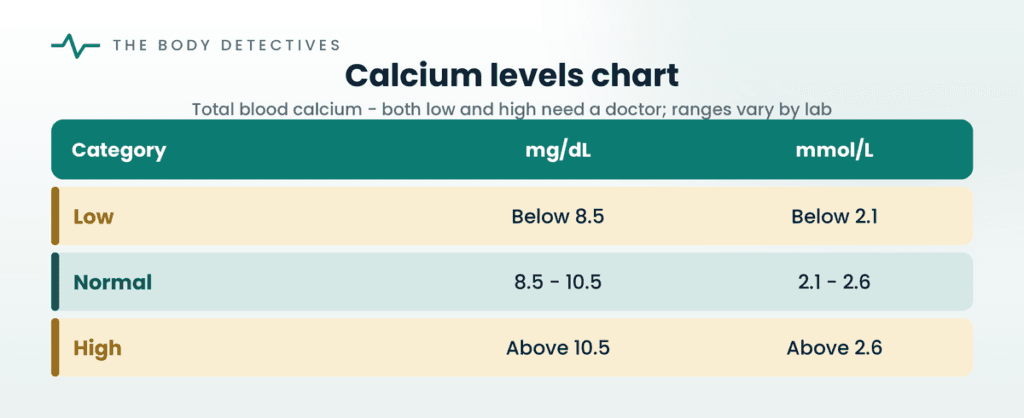
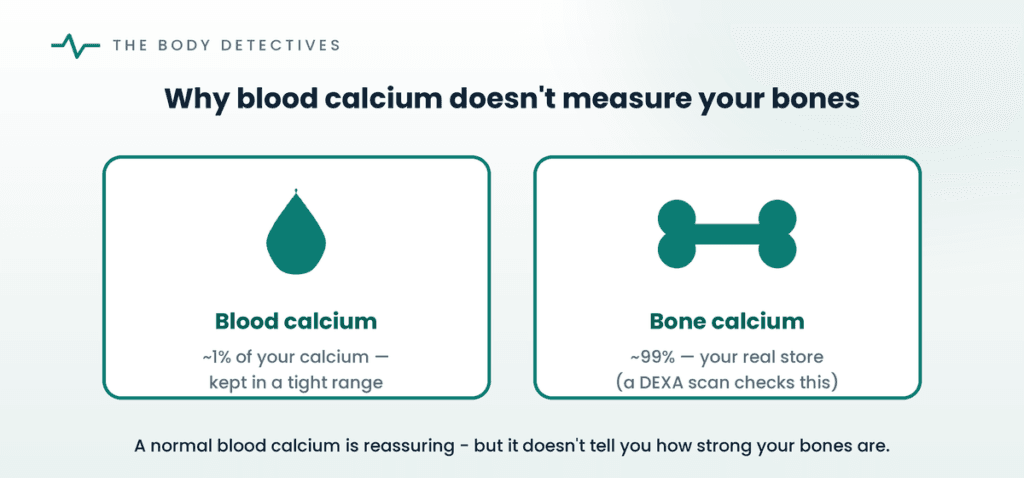
A calcium blood test measures the total calcium in your blood. About 99% of your body’s calcium is stored in your bones and teeth; only about 1% circulates in your blood, where it’s held within a tight range by hormones — mainly parathyroid hormone and vitamin D. A standard test measures total calcium; sometimes an “ionised” (free) calcium or an albumin-corrected calcium is used, because low blood protein (albumin) can lower the total reading without a true deficiency. For a plain-language overview of the test, MedlinePlus is a reliable source.
Normal calcium levels
Total blood calcium is reported in mg/dL or mmol/L. The guide below shows typical adult ranges, though exact cut-offs vary by laboratory.
| Category | mg/dL | mmol/L |
|---|---|---|
| Low | Below 8.5 | Below 2.1 |
| Normal | 8.5–10.5 | 2.1–2.6 |
| High | Above 10.5 | Above 2.6 |
Because the level is kept so tightly controlled, even small but persistent shifts outside the range are worth investigating — both high and low calcium need a doctor’s review.
Why a normal calcium doesn’t mean strong bones
Here’s the catch many people miss: because your body keeps blood calcium steady by moving it in and out of your bones, a perfectly normal blood test can sit alongside thinning bones. Bone strength is measured separately, with a bone-density (DEXA) scan — not with a calcium blood test.
What high calcium means (hypercalcaemia)
A high calcium level (hypercalcaemia) is most often caused by an overactive parathyroid gland or, less commonly, by some cancers — together these explain the large majority of cases. Other causes include excess vitamin D or calcium supplements, prolonged bed rest, and certain medicines. Mild cases may cause no symptoms; higher levels can bring the classic “bones, stones, groans, and moans” — bone aches, kidney stones, constipation and tummy pain, and fatigue or low mood.
What low calcium means (hypocalcaemia)
A low calcium level (hypocalcaemia) is often linked to low vitamin D, kidney disease, an underactive parathyroid gland, or low magnesium. Symptoms can include tingling in the fingers or around the mouth, muscle cramps and spasms, and — when severe — more serious muscle and heart problems. Low blood albumin can also lower the total reading without a true deficiency, which is why doctors sometimes check a corrected or ionised calcium.
Calcium, vitamin D, and your diet
Calcium and vitamin D work as a pair: you need enough vitamin D to absorb the calcium you eat. Good food sources include dairy, leafy greens, tofu, fortified plant milks, and tinned fish with soft bones. Most adults need around 1,000 mg of calcium a day (more in later life). Getting calcium from food is generally preferred — very high supplement doses aren’t better and can push blood calcium up. Our guides to vitamin D and magnesium cover the partners that work alongside it.
When to see a doctor
Any calcium result outside the normal range should be reviewed by your doctor, who may repeat the test and look at related results such as vitamin D, parathyroid hormone, and kidney function. Seek prompt advice if a high or low calcium comes with symptoms like severe tiredness and confusion, persistent abdominal or kidney-stone pain, or significant muscle cramps and tingling.
The bottom line
Calcium does much more than build bones, and your body keeps its blood level tightly controlled. A result outside the normal range is a signal to look for an underlying cause rather than something to fix with diet alone — and remember that a normal blood calcium doesn’t confirm strong bones, which need their own (DEXA) test. For most people, calcium from a balanced diet, with enough vitamin D, works best.
This article is for general educational purposes only and is not a substitute for professional medical advice. Always consult your own doctor about test results or before starting supplements. See our Medical Disclaimer for more information.