Iron Studies: Reading Your Full Iron Panel
Iron studies can look baffling: a cluster of results — serum iron, transferrin, TIBC, saturation, ferritin — that seem to pull in different directions. But they’re designed to be read together, and as a group they tell a clear story about whether your body has too little iron, too much, or just enough. This guide explains what each test in an iron panel measures, and how to recognise the classic patterns of iron deficiency and iron overload.
What are iron studies?
Iron studies (also called an iron panel) are a group of blood tests that, together, show your iron status. No single test gives the full picture, so they’re interpreted as a set. They’re most often ordered to investigate suspected iron deficiency — the world’s most common nutritional deficiency — or, less often, to check for iron overload. For more, MedlinePlus is a reliable source.
The four tests explained
Each test captures a different part of the iron story. Serum iron is the amount of iron circulating in your blood right now. Transferrin is the protein that carries that iron, and TIBC (total iron-binding capacity) measures how much iron your blood could carry in total — essentially the size of the transport fleet. Transferrin saturation is the percentage of that capacity actually filled with iron. And ferritin reflects your stored iron — your reserves in the bank.
Spotting deficiency vs overload
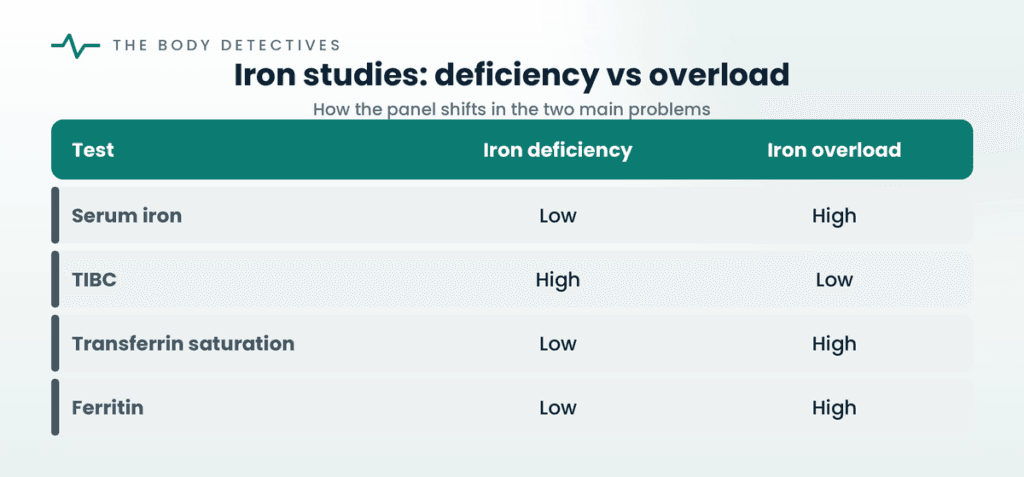
The power of the panel is in the pattern. Two opposite pictures cover most results:
In iron deficiency, your stores empty, so ferritin and serum iron fall, your body makes extra transferrin (pushing TIBC up), and saturation drops. In iron overload, the reverse happens: iron, saturation, and ferritin all climb.
Transferrin saturation explained
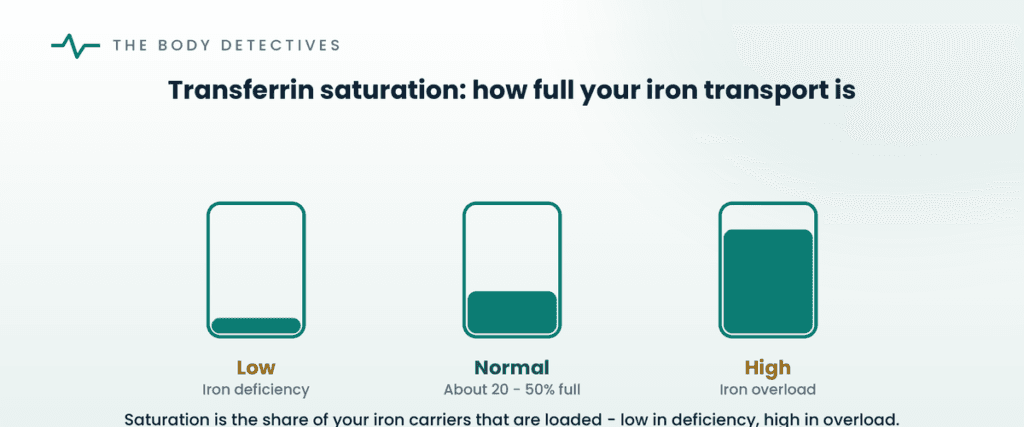
One number ties the panel together — transferrin saturation, the share of your iron carriers that are actually loaded:
Think of transferrin as a fleet of delivery vans and saturation as how full they are. In deficiency the fleet grows but runs nearly empty; in overload the vans are packed. A saturation below about 20% suggests too little iron, while above roughly 50% raises the possibility of overload.
What low iron means
Low iron — shown by low ferritin, low saturation, and high TIBC — most often comes from blood loss (such as heavy periods or gut bleeding), not eating enough iron, poor absorption, or the increased needs of pregnancy. It can progress to iron-deficiency anaemia, with fatigue, breathlessness, and pale skin. Pairing iron-rich foods with vitamin C helps absorption.
What high iron means
High iron — high saturation and ferritin — can be inherited, as in haemochromatosis, a condition where the body absorbs too much iron over years, or can result from repeated blood transfusions. Because excess iron can gradually damage the liver, heart, and other organs, a persistently high saturation and ferritin are worth investigating properly.
A note on inflammation
One important catch: ferritin also rises with inflammation, infection, or liver problems, quite apart from your iron stores. So a normal or even high ferritin doesn’t always rule out iron deficiency — if inflammation is present, doctors weigh the whole panel, sometimes alongside an inflammatory marker, rather than trusting ferritin alone.
When to see a doctor
Discuss any abnormal iron results with your doctor, who will interpret them alongside your symptoms, your full blood count, and your medical history. Seek advice for ongoing fatigue, breathlessness, or unexplained symptoms, and don’t start iron supplements on your own — taking iron you don’t need is unhelpful and, in people prone to overload, potentially harmful.
The bottom line
Iron studies only make sense as a team. Read together, serum iron, transferrin, TIBC, saturation, and ferritin reveal whether your iron is low, high, or just right — and a low-ferritin, low-saturation, high-TIBC pattern is the classic signature of iron deficiency. If your results look abnormal or contradictory, your doctor can piece them into the bigger picture and guide what to do next.
This article is for general educational purposes only and is not a substitute for professional medical advice. Always consult your own doctor about your blood test results before starting any treatment. See our Medical Disclaimer for more information.