Estrogen Levels: Normal Range, Cycle, and Menopause
Estrogen levels do far more than govern fertility — this key hormone shapes everything from your bones and heart to your skin, mood, and sleep. Unlike most blood markers, estrogen has no single “normal” number: in women it rises and falls dramatically across the menstrual cycle, then drops at menopause. This guide explains what’s typical at each stage, what low and high estrogen mean, and when it’s worth testing.
What is estrogen?
Estrogen (spelt oestrogen in the UK) is the main female sex hormone, though men make small amounts too. The most important and most often measured form is estradiol (E2), produced mainly by the ovaries. It drives the menstrual cycle and reproduction, but it also helps keep bones strong, supports heart and blood-vessel health, and influences mood, skin, and sleep. For more on reproductive hormones, the Endocrine Society is a reliable source.
Normal estrogen levels by cycle phase
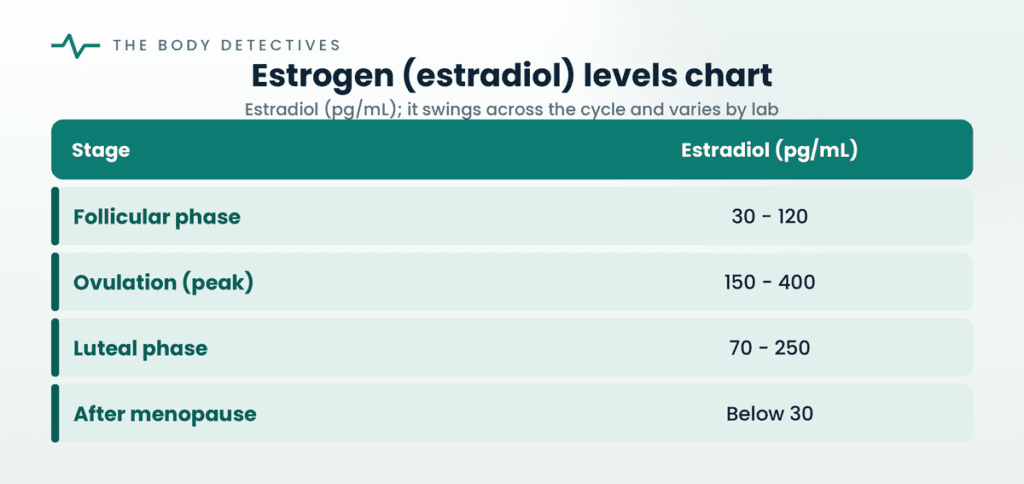
Because estradiol swings so much, labs report it by where you are in your cycle. The ranges below (in pg/mL) are typical, though they vary by laboratory and the day you’re tested.
| Stage | Estradiol (pg/mL) |
|---|---|
| Follicular phase | 30–120 |
| Ovulation (peak) | 150–400 |
| Luteal phase | 70–250 |
| After menopause | Below 30 |
Men’s estradiol sits much lower, usually around 10–40 pg/mL. The single most important thing when reading an estrogen result is the cycle day it was taken on.
How estrogen changes across your cycle
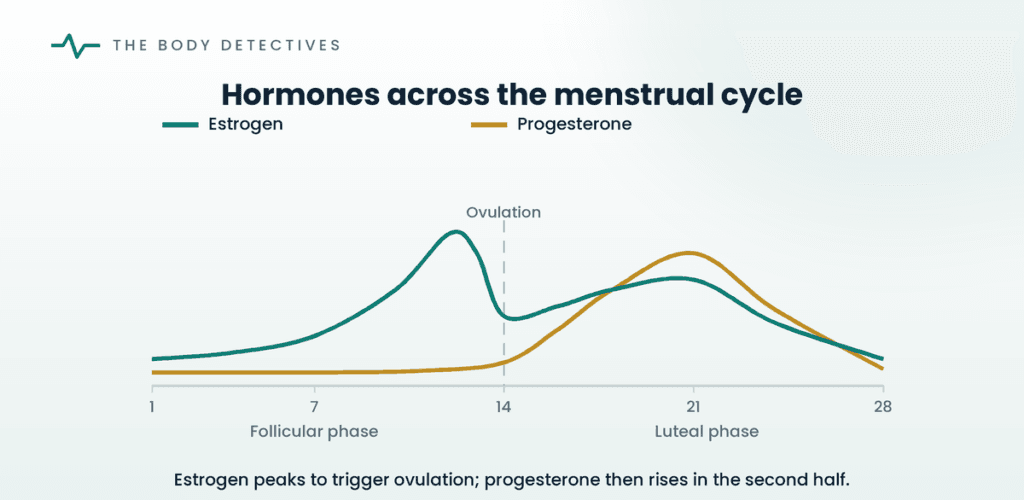
In the first half of your cycle (the follicular phase), estrogen climbs as an egg matures, peaking just before ovulation — that surge is what triggers the egg’s release. After ovulation, estrogen dips, then rises again more gently alongside progesterone during the luteal phase, before both fall and your period begins.
Estrogen and menopause
As you approach menopause (perimenopause), estrogen production becomes erratic — some months high, some very low — which drives symptoms like hot flushes, night sweats, irregular periods, and mood changes. After menopause, estradiol settles at a low level (usually below 30 pg/mL). This drop also speeds up bone loss, which is why bone health and calcium matter even more afterwards.
Signs of low estrogen
Low estrogen — whether from menopause, certain medical conditions, or very low body weight and over-exercising — can cause hot flushes, vaginal dryness, low libido, poor sleep, low mood, and thinning bones. In younger women, persistently low estrogen with missed periods is worth investigating.
Signs of high estrogen
Estrogen that’s high relative to progesterone (sometimes called oestrogen dominance) can bring heavy or painful periods, breast tenderness, bloating, and mood swings. It can occur with conditions like PCOS, certain medicines, and excess body fat. Very high levels are occasionally caused by ovarian cysts or, rarely, hormone-producing tumours.
When to see a doctor
Consider seeing your doctor for menopausal symptoms that affect your quality of life, periods that stop or become very irregular, difficulty conceiving, or any unusual bleeding. Estrogen is usually interpreted alongside other hormones — such as FSH, progesterone, and testosterone — and always in the context of your cycle and symptoms.
The bottom line
Estrogen is a hormone of constant change, especially in women, so there’s no one “right” number — only what’s normal for your stage and cycle day. It quietly protects your bones, heart, and more, which is why the shifts around menopause have such wide-reaching effects. If symptoms are troubling you, a doctor can test and interpret your levels in full context.
This article is for general educational purposes only and is not a substitute for professional medical advice. Always consult your own doctor about hormone tests or symptoms. See our Medical Disclaimer for more information.