Folate Deficiency: Signs, Causes, and How to Raise Your Levels
Folate deficiency is one of the most common vitamin shortfalls in the world, and because its early signs are so vague — tiredness, low mood, a sore tongue — it often goes unnoticed for months. Folate (vitamin B9) is essential for building healthy red blood cells and DNA, so when your levels drop, your whole body feels it. This guide explains what your folate level actually means, the signs to watch for, what causes a deficiency, and how to bring your levels back up safely.
What is folate (and why it matters)?
Folate is a B vitamin (vitamin B9) found naturally in leafy green vegetables, beans, and citrus fruit — its name comes from the Latin folium, meaning “leaf,” a clue to where it’s most abundant. Folic acid is the man-made form used in supplements and fortified foods. Your body uses folate to build DNA, divide cells, and make red blood cells, which is why a shortage shows up first in fast-dividing tissues like your blood and the lining of your mouth. Folate is especially important before and during pregnancy, when it helps protect the baby’s developing spine and brain.
Normal folate levels
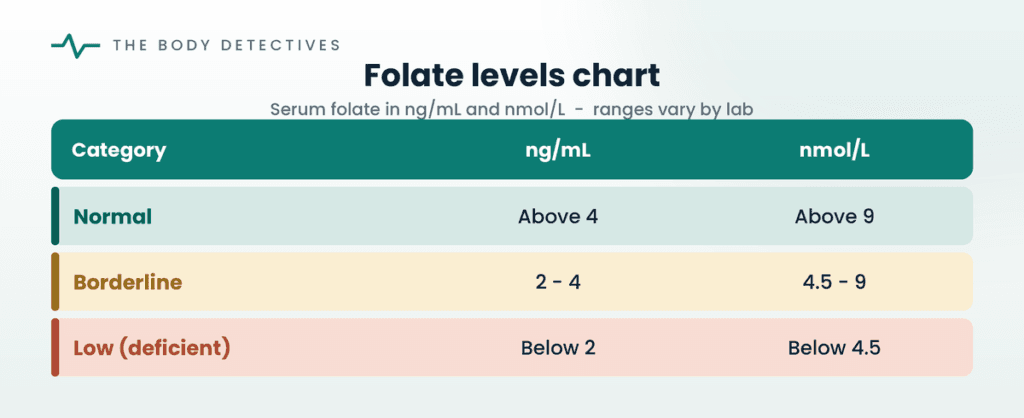
Folate is checked with a simple blood test. There are two versions: serum folate, which reflects what you’ve eaten recently, and red blood cell (RBC) folate, which gives a more reliable picture of your long-term stores. The table below is a typical guide for serum folate — but ranges differ between laboratories, so always read your result against your own lab’s reference range.
| Category | Serum folate (ng/mL) | nmol/L |
|---|---|---|
| Normal | Above 4 | Above 9 |
| Borderline | 2–4 | 4.5–9 |
| Low (deficient) | Below 2 | Below 4.5 |
Because serum folate can rise for a day or two after a folate-rich meal, a borderline result is sometimes rechecked, or an RBC folate test is used to confirm a true deficiency.
Signs and symptoms of folate deficiency
The symptoms of folate deficiency tend to build slowly and overlap with many other conditions. The most common include:
- Persistent tiredness, weakness, and low energy
- Pale skin and shortness of breath
- A smooth, sore, or red tongue, and mouth ulcers
- Irritability or low mood
- Difficulty concentrating (“brain fog”)
When a deficiency lasts long enough, it leads to a specific type of anemia called megaloblastic anemia, where the bone marrow makes red blood cells that are larger than normal and don’t work properly. That’s different from the small, pale cells of iron-deficiency anemia, which we cover in our guide to low ferritin.
What causes low folate?
- A diet low in fresh vegetables, fruit, and legumes
- Drinking too much alcohol, which interferes with how folate is absorbed and used
- Pregnancy and breastfeeding, which sharply raise folate needs
- Absorption problems, such as coeliac disease or inflammatory bowel disease
- Certain medications, including methotrexate, some anti-seizure drugs, and sulfasalazine
Older adults and people on restrictive diets are also at higher risk.
Folate vs vitamin B12: why they’re tested together
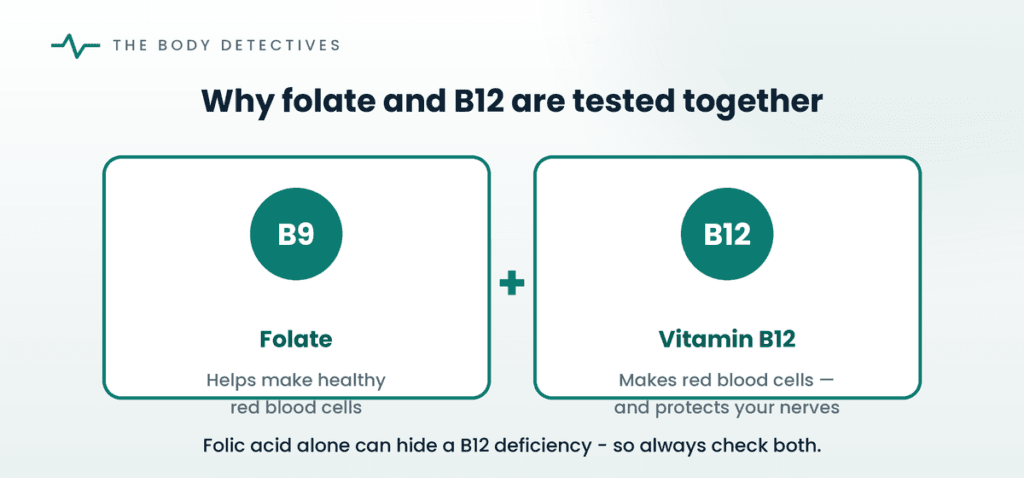
Folate and vitamin B12 work as a team to make healthy red blood cells, and a shortage of either one causes a very similar anemia — which is why doctors usually check both at the same time. There’s an important catch: taking folic acid can fix the anemia caused by a B12 deficiency while the nerve damage from low B12 quietly continues in the background. This is why you shouldn’t start high-dose folic acid on your own without also having your B12 checked. If this applies to you, our guide to vitamin B12 deficiency explains the other half of the picture.
How to raise your folate levels
For most people, food is the best place to start. Folate-rich foods include dark leafy greens (spinach, kale), broccoli, Brussels sprouts, lentils, chickpeas, beans, asparagus, avocado, and citrus fruit. Cooking with lots of water and high heat destroys some of it, so light steaming helps preserve it. Many countries also fortify flour and breakfast cereals with folic acid.
If a blood test confirms a deficiency, your doctor may suggest a folic acid supplement for a few months to refill your stores, then a maintenance plan. Anyone who is pregnant or trying to conceive is usually advised to take a daily folic acid supplement (commonly 400 micrograms, or more if they are higher risk) — but the right dose for you should come from your doctor, especially because of the B12 point above. For a thorough, regularly updated look at food sources and recommended intakes, the NIH Office of Dietary Supplements keeps an excellent fact sheet.
When to see a doctor
See your doctor if you have ongoing tiredness, a sore tongue, mouth ulcers, or unexplained low mood — especially if you’re pregnant, drink alcohol regularly, or have a digestive condition. Seek prompt medical advice if you develop numbness or tingling in your hands or feet, problems with balance or memory, or a fast, pounding heartbeat, as these can point to a more serious deficiency (of folate or B12) that needs proper testing rather than self-treatment.
The bottom line
Folate deficiency is common, easy to miss, and usually straightforward to fix once it’s found. A simple blood test tells you where you stand, a diet rich in greens, beans, and citrus covers most people’s needs, and supplements help when they’re genuinely needed. If your symptoms persist, let your doctor check both your folate and your B12 and guide you to the real cause.
This article is for general educational purposes only and is not a substitute for professional medical advice. Always consult your own doctor before starting supplements or making changes to your health routine. See our Medical Disclaimer for more information.