Zinc Deficiency: Signs, Causes, and Normal Levels
Zinc deficiency is easy to overlook, yet this small trace mineral runs an enormous number of jobs — from defending you against infections to healing wounds and keeping your sense of taste sharp. Because your body has no large store of zinc, a shortfall can build quietly and show up in surprisingly varied ways. This guide covers the signs of zinc deficiency, what causes it, what a blood test shows, and how to put it right.
What does zinc do?
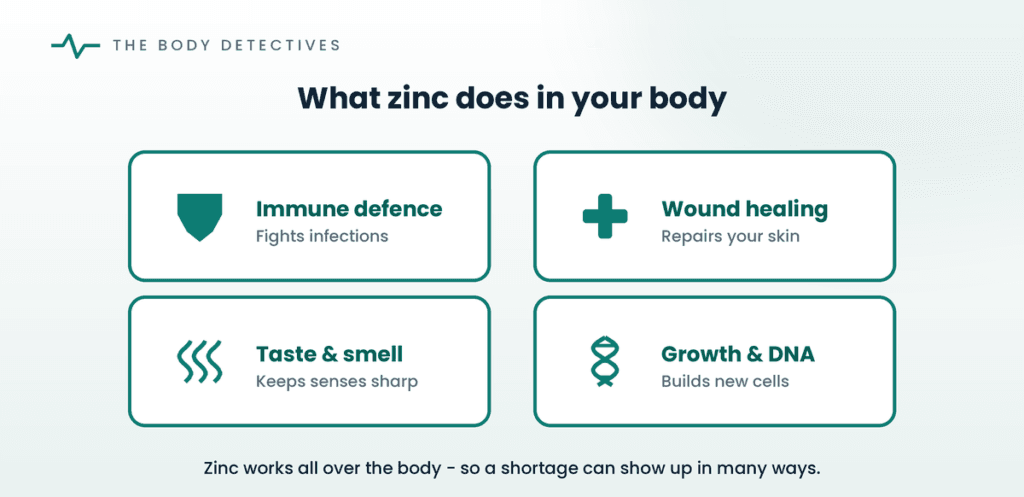
Zinc takes part in hundreds of processes throughout your body, which is why a shortage can be felt in so many places at once.
Among its best-known roles: it helps your immune system fight infection, supports wound healing and skin health, keeps your sense of taste and smell working, and is essential for growth, fertility, and making DNA and proteins. Because it’s needed almost everywhere, running low rarely causes just one symptom.
Signs of zinc deficiency
Mild zinc deficiency can be subtle, but common signs include:
- Frequent infections, or being slow to recover from them
- Cuts and wounds that heal slowly
- A reduced sense of taste or smell
- Hair thinning or hair loss
- Skin problems such as rashes or acne
- Poor appetite
- In children, slowed growth and development
Normal zinc levels
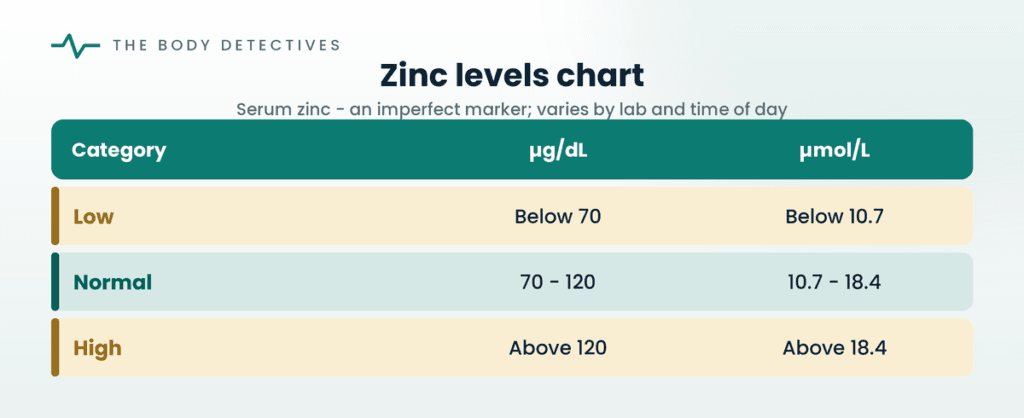
Zinc is usually checked with a serum zinc blood test, reported in micrograms per decilitre (µg/dL) or micromoles per litre (µmol/L).
| Category | µg/dL | µmol/L |
|---|---|---|
| Low | Below 70 | Below 10.7 |
| Normal | 70–120 | 10.7–18.4 |
| High | Above 120 | Above 18.4 |
One important caveat: serum zinc is an imperfect marker. Levels dip after meals, vary through the day, and fall during infection or inflammation — so doctors read the number alongside your symptoms and diet rather than relying on it alone.
What causes zinc deficiency?
The most common cause is simply not getting enough. Zinc is found mainly in animal foods, so vegetarians and vegans are more at risk — partly because plant compounds called phytates reduce how much you absorb. People who follow restricted diets are also more prone to low vitamin B12. Other causes include gut conditions that impair absorption (such as coeliac or inflammatory bowel disease), weight-loss surgery, heavy alcohol use, and high losses from chronic diarrhoea. Needs also rise during pregnancy and breastfeeding.
Best food sources of zinc
You can meet your needs from a varied diet. Particularly rich sources include oysters and other shellfish, red meat and poultry, and — in smaller, less-absorbable amounts — beans, lentils, nuts, seeds, and whole grains. Soaking or sprouting beans and grains improves absorption. Most adults need around 8–11 mg a day. Like magnesium, zinc is one of the minerals a balanced diet usually supplies. For amounts and food sources, the NIH Office of Dietary Supplements is a reliable source.
Should you take a zinc supplement?
For most people, food is enough, and a short course of zinc can help during a confirmed deficiency or sometimes at the very start of a cold. But more isn’t better: taking high doses long-term can cause nausea, weaken your immune system, and block the absorption of copper, creating a new problem. If you suspect a deficiency, it’s best to confirm it and be guided on the dose rather than self-treating at high levels.
When to see a doctor
See your doctor if you have persistent signs such as recurrent infections, slow-healing wounds, unexplained hair loss, or a lasting change in taste — especially if you have a gut condition or follow a restricted diet. A simple blood test, interpreted in context, can help confirm whether zinc is the issue.
The bottom line
Zinc is a small mineral with a big workload, so a shortage can quietly affect your immunity, skin, healing, and senses. A varied diet covers most people’s needs; if you’re at higher risk or have ongoing symptoms, get tested rather than guessing — and keep any supplement sensible, because too much zinc carries its own risks.
This article is for general educational purposes only and is not a substitute for professional medical advice. Always consult your own doctor about test results or before starting supplements. See our Medical Disclaimer for more information.