Vitamin K: The Vitamin That Lets Your Blood Clot
Vitamin K is the quiet workhorse behind one of your body’s most vital tricks: stopping bleeding. Named from the German word for clotting, Koagulation, it is the vitamin that lets your blood form a clot and seal a wound — and the same vitamin is increasingly recognised for helping keep your bones strong and your arteries clear. It rarely makes headlines, and deficiency is uncommon, but its job is one you cannot do without. Here is what vitamin K does, the difference between its two forms, and who actually needs to think about it.
What vitamin K does
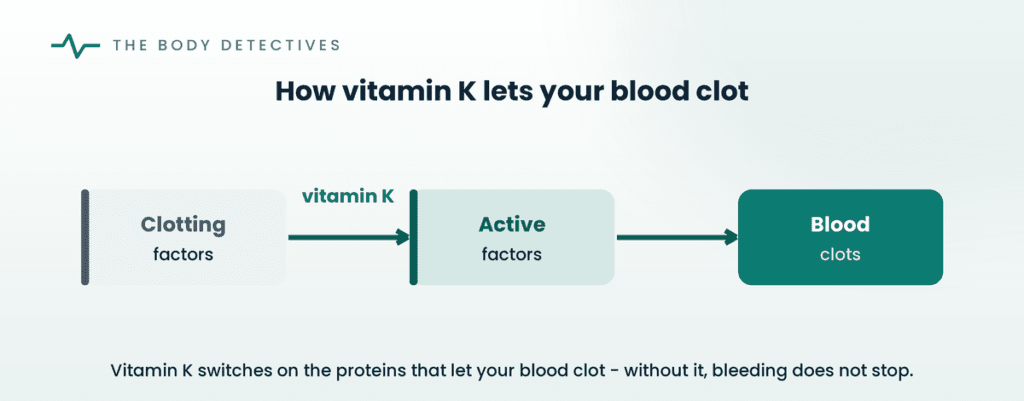
Vitamin K’s headline role is blood clotting. Several of the proteins that build a clot are made in an inactive form, and they only switch on once vitamin K has worked on them. Without enough of it, those proteins stay idle and even a small cut can bleed for longer than it should. The diagram below shows the idea.
Its second, less famous job is managing calcium. Vitamin K helps activate proteins that steer calcium into your bones, where you want it, and away from your artery walls, where you do not. This is exactly why it is increasingly studied alongside vitamin D for bone and heart health.
K1 and K2: the two forms
Vitamin K comes in two main forms, and they are not quite interchangeable. The chart below lays out the difference.
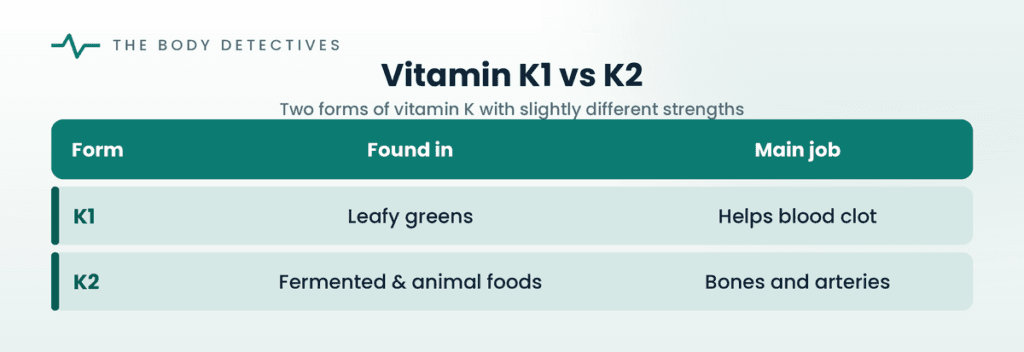
K1 (phylloquinone) comes from green leafy vegetables — spinach, kale and broccoli — and is the form most tied to blood clotting. K2 (menaquinone) comes from fermented foods and animal products, and is the form more associated with directing calcium to your bones. Helpfully, friendly bacteria in your gut also make a little K2 for you, which is part of why a true shortfall is so unusual.
How much you need, and why deficiency is rare
The amounts are small — around 120 micrograms a day for men and 90 for women — and most people reach them easily through a normal diet. Genuine deficiency is uncommon in healthy adults, thanks both to that diet and to your gut bacteria. It is more of a concern in people with conditions that block fat absorption, those on long-term antibiotics, and especially newborns, whose stores are naturally low. That is why babies are routinely offered a vitamin K injection at birth, to protect against rare but serious bleeding.
When to see a doctor
For most people, vitamin K needs no special attention. But see a doctor if you bruise very easily, bleed for a long time from minor cuts, or notice frequent nosebleeds or bleeding gums, as these can point to a clotting problem worth checking. One important warning: if you take the blood thinner warfarin, your vitamin K intake directly affects how the drug works — so do not make sudden, large changes to how many leafy greens you eat without speaking to your doctor first.
The bottom line
Vitamin K is a small, low-drama nutrient with two big jobs: helping your blood clot, and helping your body put calcium where it belongs. A plate with regular leafy greens covers most people comfortably, and true deficiency is rare. The main groups who need to pay closer attention are newborns, people with absorption problems, and anyone taking warfarin — for everyone else, vitamin K mostly takes care of itself.
This article is for general educational purposes only and is not a substitute for professional medical advice, diagnosis or treatment. Always speak to your own doctor about your health, and before changing your diet or supplements — especially if you take any blood-thinning medication. See our Medical Disclaimer for more information.