Normal Body Temperature: What’s Normal, Fever, and More
A normal body temperature isn’t the single, fixed 37°C (98.6°F) most of us grew up with. That famous figure comes from a study in the 1800s, and modern research puts the true average a little lower — and, more importantly, shows that your temperature is always on the move. It rises and falls through the day, differs from person to person, and depends on where and how you measure it. This guide explains the normal range, what counts as a fever or hypothermia, and why any single reading is really just a snapshot.
What is a normal body temperature?
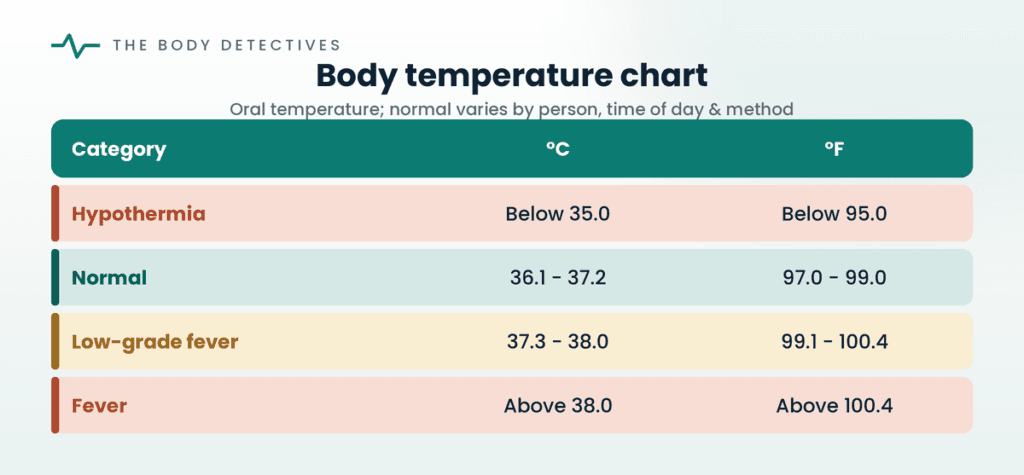
For most healthy adults, a normal oral temperature sits somewhere between about 36.1°C and 37.2°C (97°F to 99°F). The widely quoted 37°C is an average, not a rule — large modern studies suggest today’s typical temperature is closer to 36.6°C. Your own baseline can run a little higher or lower and still be perfectly normal. Children tend to run slightly warmer, while older adults often run cooler, which can make a fever harder to spot later in life. For more, Cleveland Clinic is a reliable source.
Body temperature ranges
These bands are a guide rather than strict lines, and the exact numbers shift with the measurement method — rectal readings run a little higher than oral, while armpit or skin readings run a little lower.
Why your temperature changes through the day
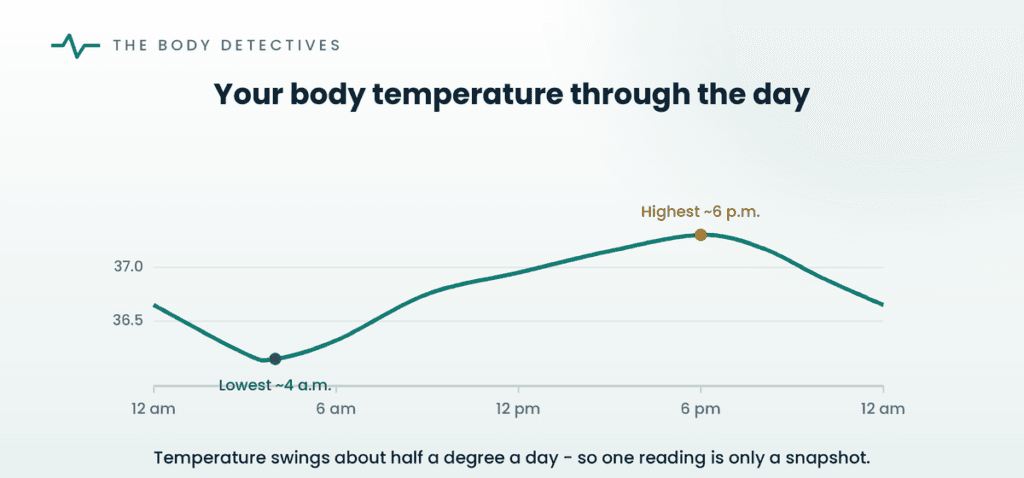
One of the biggest reasons a single reading can mislead is your body clock. Core temperature follows a daily rhythm, swinging by around half a degree: it’s at its lowest in the early hours of the morning (around 4 a.m.) and peaks in the late afternoon or early evening (around 6 p.m.).
This is why a reading of 37.3°C might be completely normal in the evening but slightly raised first thing in the morning. Temperature also rises with exercise, after eating, and — in women — during the second half of the menstrual cycle. Your core temperature even dips slightly to help you fall asleep, which is one reason a cool bedroom supports good sleep.
What counts as a fever?
Most healthcare providers define a fever as an oral temperature of 38°C (100.4°F) or above. A reading between roughly 37.3°C and 38°C is often called a low-grade or raised temperature — worth keeping an eye on, but not a true fever. A fever is usually a sign your immune system is fighting an infection, which is why it often comes alongside a faster heart rate and a rise in inflammation markers such as CRP.
What about a low temperature?
A core temperature below 35°C (95°F) is defined as hypothermia and is a medical emergency. It’s usually caused by cold exposure, but age, certain medicines, and an underactive thyroid can all contribute. A mildly low reading on its own — especially in the morning or in older adults — is often nothing to worry about.
Getting an accurate reading
To make your readings useful, measure consistently: use the same thermometer and the same site, and note the time of day. Wait at least 15 to 30 minutes after eating, drinking, or exercising before taking an oral temperature. No thermometer is perfect, and technique matters — a poorly positioned ear or forehead device can read up to a degree off on its own.
When to see a doctor
Seek urgent care for a temperature above 39.4°C (103°F) that won’t come down, any fever with a stiff neck, confusion, a severe headache, a new rash, or breathing difficulty, or any reading below 35°C (95°F). A fever in a baby under three months, or a fever lasting more than a few days, also needs prompt medical attention.
The bottom line
There’s no single “correct” body temperature — only a normal range and your own baseline, both of which move through the day. Knowing that your temperature naturally peaks in the evening and dips overnight helps you read a thermometer sensibly. Treat 38°C as the usual line for a fever, watch for the warning signs above, and remember that one number is only ever part of the picture.
This article is for general educational purposes only and is not a substitute for professional medical advice. Always consult your own doctor if you are worried about a fever, a very low temperature, or any concerning symptom. See our Medical Disclaimer for more information.