High Liver Enzymes (ALT & AST): What They Mean
High liver enzymes are one of the most common surprises on a routine blood test — and one of the most worrying-looking. The good news is that mildly raised levels are usually not an emergency, and the most frequent cause is very treatable. So what do high liver enzymes actually mean, what causes them, and when should you be concerned? Let’s decode it.
What are liver enzymes (ALT and AST)?
ALT (alanine aminotransferase) and AST (aspartate aminotransferase) are enzymes found mainly inside your liver cells, where they help with normal chemical reactions. When liver cells are irritated, inflamed, or damaged, these enzymes leak out into your bloodstream — so higher-than-normal levels are a signal that your liver is under some kind of stress. They’re part of a group of blood tests often called liver function tests (LFTs).
Normal liver enzyme levels
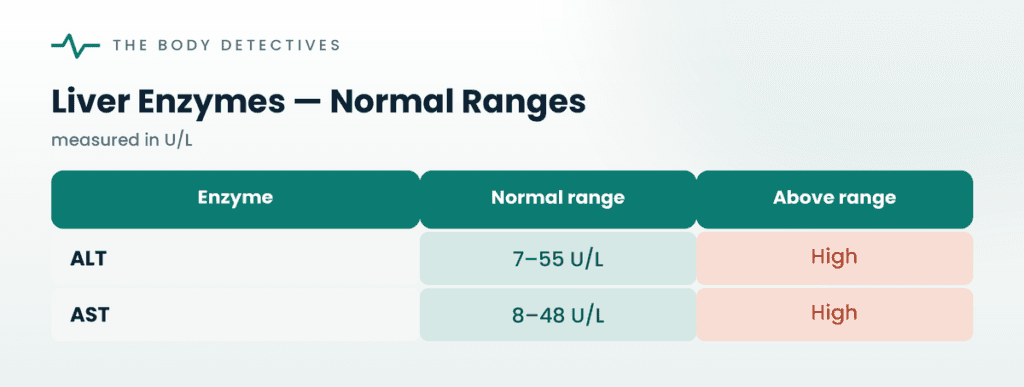
Ranges vary between laboratories and by sex, but a rough guide is:
| Enzyme | Typical normal range |
|---|---|
| ALT | About 7–55 U/L |
| AST | About 8–48 U/L |
Always read your result against your own lab’s reference range, which is printed next to your number. A small elevation is interpreted very differently from a very high one.
What do high liver enzymes mean?
High liver enzymes mean that liver cells have been releasing more ALT and AST than usual, which points to some inflammation or injury in the liver. They don’t tell you the cause on their own — that’s why your doctor looks at the size of the rise, the pattern between ALT and AST, your history, and sometimes further tests to work out what’s going on.
Common causes
- Fatty liver disease — now the most common cause, linked to excess weight, type 2 diabetes, and high cholesterol
- Drinking too much alcohol
- Certain medications and supplements (including some painkillers in high doses)
- Viral hepatitis (such as hepatitis B or C)
- Less commonly, autoimmune or inherited liver conditions
What are the symptoms?
Most people with mildly high liver enzymes have no symptoms at all — it’s often found by chance. When symptoms do occur, they can include tiredness, pain in the upper right side of the abdomen, nausea, yellowing of the skin or eyes (jaundice), dark urine, or itching. These warrant prompt medical attention.
How to lower high liver enzymes
Because fatty liver is so often the cause, the same healthy habits usually help the most: losing excess weight, staying active, cutting back on alcohol, and keeping your blood sugar and cholesterol in check. It’s also worth reviewing any medications or supplements with your doctor. You can find a clear, reliable overview of elevated liver enzymes from the Cleveland Clinic.
When should you see a doctor?
Let your doctor guide you on any abnormal result — they’ll often simply repeat the test and check for the common causes. Seek prompt care if you have jaundice, severe abdominal pain, or persistent vomiting. Since fatty liver is closely tied to your metabolism, it’s worth reading our guides to blood sugar levels and cholesterol levels, which often move together with your liver health.
The bottom line
High liver enzymes are a common, usually mild finding that signals your liver is under some stress — most often from fatty liver disease, which responds well to lifestyle changes. A single raised result is rarely a reason to panic, but it should be followed up so your doctor can find the cause and help you bring the numbers down.
This article is for general educational purposes only and is not a substitute for professional medical advice. Always consult your own doctor about your personal health. See our Medical Disclaimer for more information.