Cortisol Levels: Signs of High and Low Cortisol
Cortisol levels have become one of the most talked-about numbers in health — usually blamed for stress, stubborn belly fat, and poor sleep. But what does cortisol actually do, what are healthy cortisol levels, and how do you know if yours are too high or too low? Let’s separate the science from the hype and decode it.
What is cortisol?
Cortisol is your body’s main stress hormone, made by the adrenal glands that sit on top of your kidneys. It’s controlled by a feedback loop between your brain and adrenals, and it does far more than manage stress: it helps regulate your blood sugar, blood pressure, metabolism, immune response, and your sleep-wake cycle. In short, you couldn’t live without it — the goal is balance, not zero.
Cortisol follows a daily rhythm
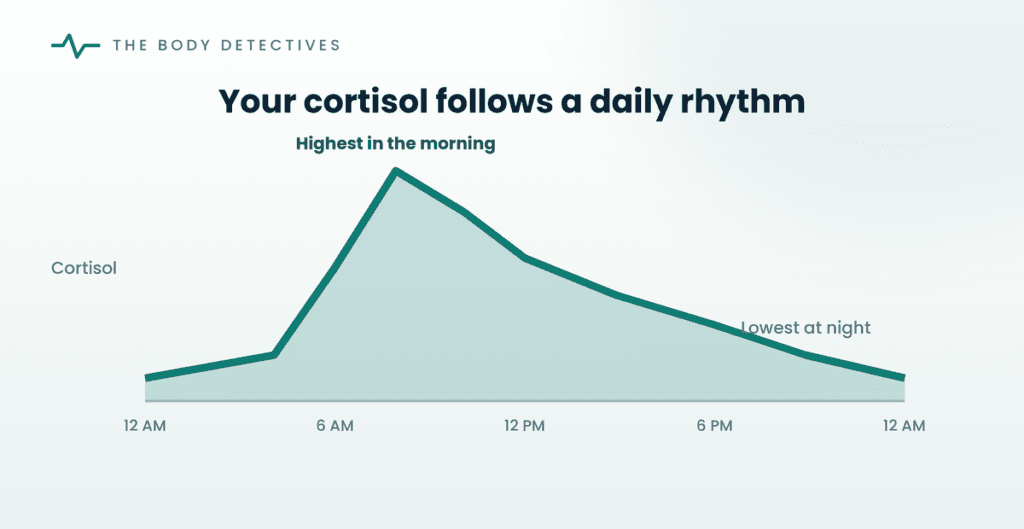
One of the most important things to understand is that cortisol isn’t steady throughout the day. It’s naturally highest in the morning (helping you wake up and feel alert) and falls to its lowest around midnight. This is exactly why the timing of a cortisol test matters so much — a “high” morning level can be completely normal, while the same number at night might not be.
Normal cortisol levels
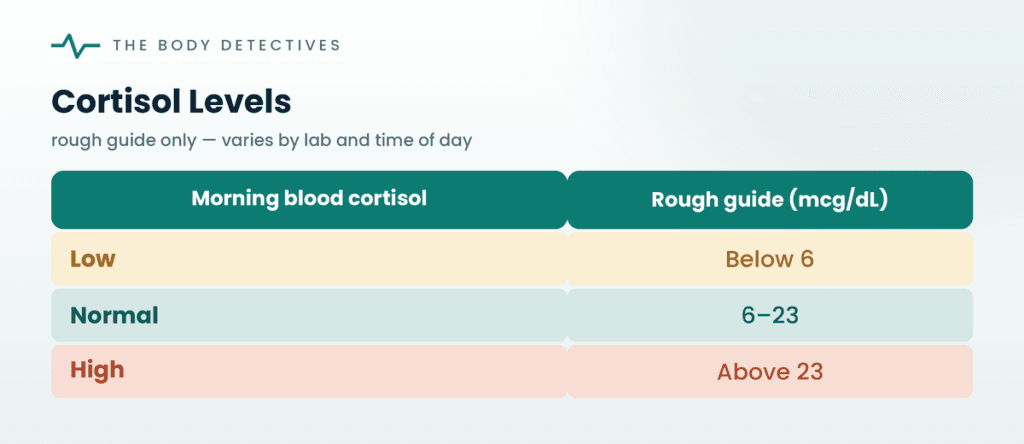
Because of that daily rhythm, there’s no single “normal” cortisol number. As a very rough guide, a morning blood cortisol often falls around 6–23 mcg/dL, but ranges differ between laboratories and testing methods (blood, saliva, or 24-hour urine). Your doctor always interprets the result alongside the time it was taken and your symptoms — never as a number on its own.
Signs of high cortisol
Persistently high cortisol (in its medical form, called Cushing’s syndrome) can cause:
- Weight gain, especially around the face and abdomen
- High blood pressure and high blood sugar
- Thin skin that bruises easily, and purple stretch marks
- Muscle weakness and mood changes
Signs of low cortisol
Persistently low cortisol (adrenal insufficiency, or Addison’s disease) can cause:
- Ongoing fatigue and weakness
- Weight loss and reduced appetite
- Low blood pressure and dizziness when standing
- Salt cravings and darkening of the skin
A note on “adrenal fatigue”
You’ll see “adrenal fatigue” blamed for tiredness all over the internet — the idea that everyday stress “burns out” your adrenals. It’s worth knowing that this is not a recognised medical diagnosis, and the evidence doesn’t support it. Real cortisol problems (like Cushing’s or Addison’s) are specific, diagnosable conditions. If you’re constantly exhausted, it’s far more likely to be something like low iron, low vitamin D, or a thyroid issue — which is why a proper check-up matters.
How to support healthy cortisol
For everyday stress (not a medical disorder), the basics genuinely help: protecting your sleep, regular but not excessive exercise, time outdoors, and stress-management habits like breathing or mindfulness. A balanced cortisol rhythm follows a balanced lifestyle. You can read a clear, reliable overview of the hormone at You and Your Hormones from the Society for Endocrinology.
When should you see a doctor?
See your doctor if you have the symptoms of high or low cortisol above, particularly unexplained weight changes, persistent high blood pressure, severe fatigue, or dizziness on standing. Since cortisol is tied to your metabolism, it’s worth reading our guides to blood sugar levels and blood pressure by age as well.
The bottom line
Cortisol is an essential hormone with a natural daily rhythm, so a healthy level is all about balance and timing rather than one magic number. True cortisol disorders are real but specific, while “adrenal fatigue” is not a recognised diagnosis. If your symptoms or numbers seem off, a doctor can test properly and find the real cause.
This article is for general educational purposes only and is not a substitute for professional medical advice. Always consult your own doctor about your personal health. See our Medical Disclaimer for more information.