Blood Sugar Levels Chart: Normal, Prediabetes, and Diabetes (HbA1c Explained)
Your blood sugar level is one of the most important — and most misunderstood — numbers in your health. Millions of people have prediabetes and don’t know it, because it usually causes no symptoms at all. So what is a normal blood sugar level, what does your HbA1c mean, and when do the numbers signal trouble? Let’s decode it.
How is blood sugar measured?
“Blood sugar” refers to the amount of glucose in your blood — your body’s main fuel. There are two common ways to measure it. A fasting blood glucose test checks your level after not eating for at least 8 hours, giving a single snapshot. An HbA1c test is different and very useful: it reflects your average blood sugar over the past 2–3 months, so it isn’t affected by what you ate that morning.
Blood sugar levels chart
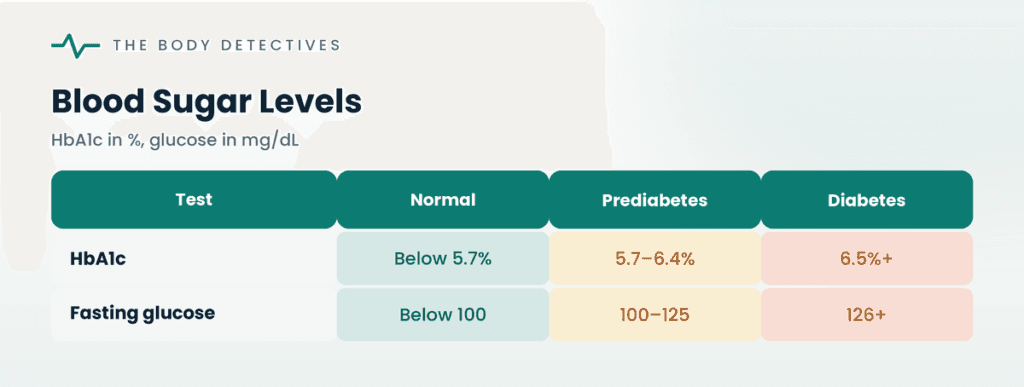
Here’s how the two main tests are interpreted for most adults:
| Test | Normal | Prediabetes | Diabetes |
|---|---|---|---|
| HbA1c (3-month average) | Below 5.7% | 5.7–6.4% | 6.5% or above |
| Fasting glucose (mg/dL) | Below 100 | 100–125 | 126 or above |
Many countries report glucose in mmol/L: a normal fasting level below 100 mg/dL is about 5.6 mmol/L, and the diabetes cut-off of 126 mg/dL is about 7.0 mmol/L. A diagnosis of diabetes is usually confirmed with repeat testing, not a single result.
What is prediabetes?
Prediabetes means your blood sugar is higher than normal, but not yet high enough to be diabetes. It’s a crucial warning stage — and here’s the good news: it is often reversible. With changes to diet, activity, and weight, many people bring their levels back to normal and avoid developing type 2 diabetes altogether. Catching it early is a genuine opportunity, not just a diagnosis.
Symptoms of high blood sugar
Early on there may be no symptoms at all. When they do appear, they can include:
- Increased thirst and a dry mouth
- Needing to urinate often, especially at night
- Tiredness and blurred vision
- Slow-healing cuts, and frequent infections
- Unexplained weight loss or increased hunger
Who is at higher risk?
You’re more likely to develop high blood sugar if you are overweight (especially around the middle), are physically inactive, have a family history of diabetes, are over 45, or had diabetes during pregnancy. High blood pressure and abnormal cholesterol often go hand in hand with it, as part of what doctors call metabolic syndrome.
How to lower your blood sugar naturally
- Cut back on sugary drinks, sweets, and refined carbohydrates (white bread, white rice).
- Fill up on fibre, vegetables, whole grains, and protein.
- Move regularly — even a daily walk improves how your body uses glucose.
- Lose excess weight; even a modest amount makes a big difference.
- Prioritise good sleep and manage stress, which both affect blood sugar.
What about low blood sugar?
Low blood sugar (hypoglycaemia) is mainly a concern for people taking diabetes medications such as insulin. Symptoms include shakiness, sweating, sudden hunger, dizziness, and confusion, and it needs fast-acting sugar to correct. If you don’t take such medication, low blood sugar is uncommon — but persistent symptoms are still worth discussing with your doctor.
When should you see a doctor?
Because high blood sugar is often silent, screening matters — especially if you have any of the risk factors above. See your doctor if your results fall in the prediabetes or diabetes range, or if you have symptoms like increased thirst, frequent urination, or unexplained fatigue. Blood sugar rarely travels alone, so it’s worth checking your cholesterol levels and blood pressure too.
The bottom line
A normal HbA1c is below 5.7%, and a normal fasting glucose is below 100 mg/dL. The prediabetes range is a powerful early warning that you can often reverse with lifestyle changes. Because high blood sugar is usually silent, a simple blood test is the best way to know your number — and to act early if it’s creeping up.
This article is for general educational purposes only and is not a substitute for professional medical advice. Always consult your own doctor about your personal health. See our Medical Disclaimer for more information.
For more, see the NHS guidance on type 2 diabetes.