Vitamin B12 Deficiency: Symptoms, Causes, and Normal Levels
Vitamin B12 deficiency is surprisingly common — and surprisingly easy to miss. Its symptoms creep in slowly and look like everyday tiredness, yet left untreated it can cause lasting nerve damage. So how do you know if you’re low, what’s a normal B12 level, and what should you do about it? Let’s decode it.
What is vitamin B12 and why does it matter?
Vitamin B12 (cobalamin) is essential for making healthy red blood cells, keeping your nervous system working, and building DNA. Your body can’t make it — you get it almost entirely from animal foods or supplements. Because B12 affects both your blood and your nerves, a deficiency can leave you exhausted and cause tingling, numbness, or memory problems.
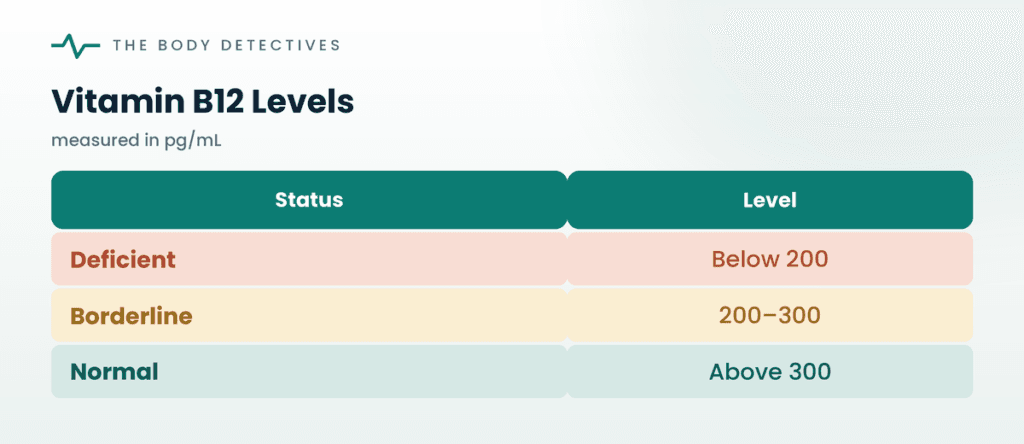
Normal vitamin B12 levels chart
B12 is measured in picograms per millilitre (pg/mL), sometimes reported as ng/L (the numbers are the same). A general guide:
| B12 level (pg/mL) | Interpretation |
|---|---|
| Below 200 | Deficient |
| 200–300 | Borderline — possible deficiency |
| Above 300 (up to ~900) | Normal |
Reference ranges vary between laboratories. Borderline results are tricky: you can have a “normal-ish” B12 and still be deficient at the tissue level, which is why doctors sometimes add tests like methylmalonic acid (MMA) or homocysteine, and always consider your symptoms.
Symptoms of vitamin B12 deficiency
Symptoms fall into two groups. The general ones include:
- Fatigue, weakness, and breathlessness
- Pale or slightly yellow skin
- A sore, red, or swollen tongue, and mouth ulcers
- Dizziness and palpitations
The more serious neurological symptoms are the ones not to ignore:
- Pins and needles, numbness, or tingling in the hands and feet
- Balance and walking problems
- Memory issues, confusion, or “brain fog”
- Mood changes, including low mood or irritability
Who is at risk, and what causes it?
You’re more likely to be low in B12 if you follow a vegan or vegetarian diet (B12 comes mainly from meat, fish, eggs, and dairy); are over 60 (absorption naturally declines with age); take metformin or long-term acid-reducing medication; have a gut condition such as coeliac or Crohn’s disease; or have had stomach or bowel surgery. A specific autoimmune cause called pernicious anaemia, where the body can’t absorb B12 properly, is also common.
How to raise your vitamin B12
- Food: meat, fish, shellfish, eggs, and dairy are rich sources; vegans should rely on fortified foods (some plant milks and cereals) and supplements.
- Oral supplements: B12 tablets work well for dietary shortfalls and mild deficiency.
- Injections: if the problem is absorption (such as pernicious anaemia) or the deficiency is severe, your doctor may prescribe B12 injections instead of tablets.
Why you shouldn’t ignore low B12
This is the key reason B12 deserves attention: while the tiredness and anaemia are reversible, the nerve damage from a prolonged deficiency can become permanent if it’s left too long. Catching and treating it early matters — so neurological symptoms like numbness or balance problems should never be brushed off.
When should you see a doctor?
See your doctor if you have ongoing fatigue or any of the symptoms above, especially tingling, numbness, or memory changes. A simple blood test can check your level, and your doctor can find the cause and choose the right treatment. B12 is just one of several common reasons to feel constantly tired — low iron, low vitamin D, and an underactive thyroid can feel very similar, so it’s worth reading our guides to low ferritin, vitamin D deficiency, and TSH levels too.
The bottom line
Vitamin B12 deficiency is common, easy to overlook, and important to treat early — especially because of its effect on the nerves. A normal level is generally above 300 pg/mL. If you have symptoms or fall into a higher-risk group, ask your doctor for a simple blood test and don’t wait on the neurological signs.
This article is for general educational purposes only and is not a substitute for professional medical advice. Always consult your own doctor before starting supplements or making changes to your health routine. See our Medical Disclaimer for more information.
For more, see the NHS guidance on vitamin B12 deficiency.