Vitamin C: Benefits, Sources, and How Much You Need
Vitamin C is the supplement people reach for at the first sign of a sniffle — but does it actually work, and what else does it do? Vitamin C is a water-soluble vitamin your body can’t make or store, so you need a regular supply from food. It builds collagen, acts as an antioxidant, supports your immune system, and helps you absorb iron from plants. This guide explains what vitamin C really does, how much you need, the best sources, and the truth about the famous cold connection.
What does vitamin C do?
Vitamin C earns its keep in several ways. Its biggest job is making collagen — the protein that holds together your skin, blood vessels, gums, and bones — which is why a severe lack causes them to break down. It’s also a powerful antioxidant, mopping up the reactive molecules that damage cells, and it supports normal immune function. One of its lesser-known roles is helping your body absorb iron from plant foods. For more, the NIH Office of Dietary Supplements is a reliable source.
Vitamin C and iron
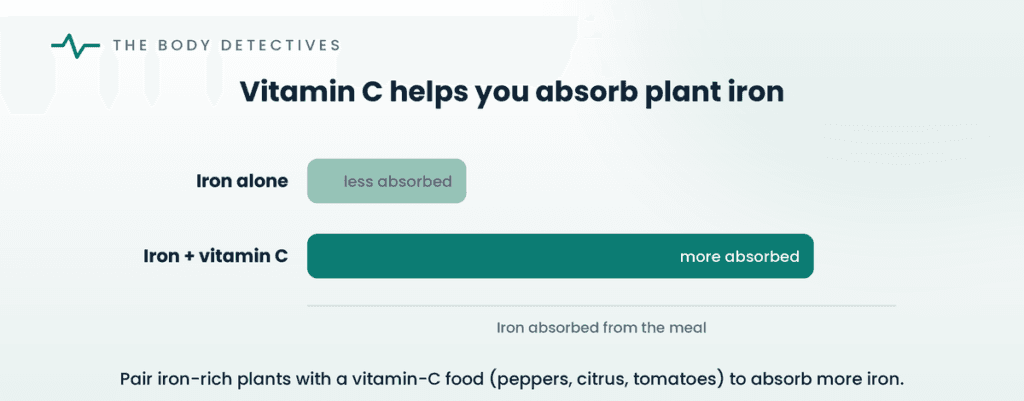
That last point is genuinely useful in the kitchen:
The iron in plant foods — called non-haem iron — is harder to absorb than the iron in meat. Vitamin C markedly improves how much of it your body takes up, so pairing iron-rich plants (like spinach, beans, or lentils) with a vitamin-C-rich food (like peppers, citrus, or tomatoes) is a simple way to get more iron. It’s especially helpful if you’re vegetarian or prone to low iron.
How much vitamin C do you need?
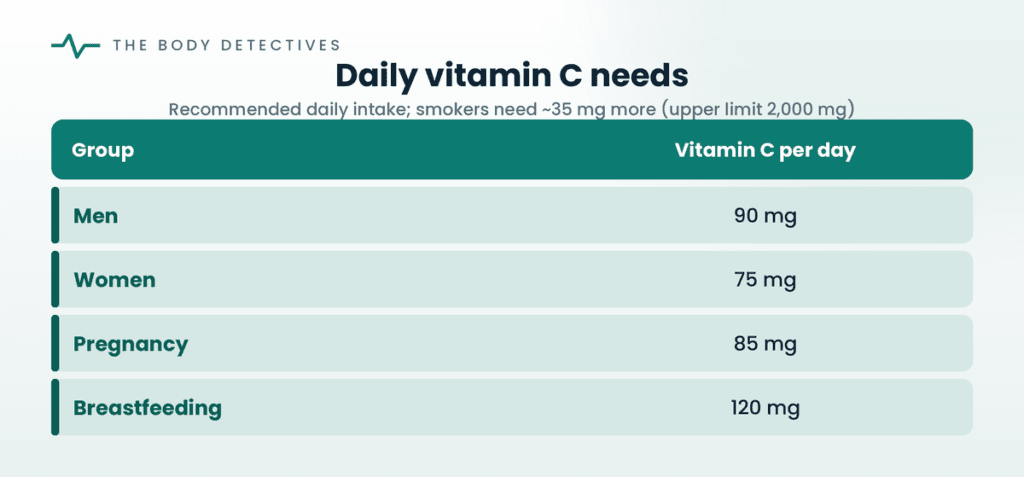
Because vitamin C isn’t stored, you need a steady daily intake — but the amount is smaller than many supplements suggest.
Most people meet these targets easily through food. Doses above about 200 mg at once aren’t absorbed as well, and anything your body doesn’t need is simply passed out in your urine.
The best food sources
You don’t need supplements to get plenty of vitamin C — a varied diet usually does the job. Citrus fruits are the classic source, but peppers, kiwi, strawberries, broccoli, and tomatoes are all rich in it; peppers actually contain more than oranges. One important tip: vitamin C is fragile and broken down by heat and light, so lightly cooked or raw vegetables keep more of it than heavily boiled ones.
Does vitamin C prevent colds?
Here’s the question everyone asks. The popular belief that vitamin C wards off colds traces back to claims made in the 1970s, but the evidence hasn’t borne them out. For most people, taking vitamin C regularly does not prevent colds. It may very slightly shorten how long a cold lasts, and starting it once you’re already ill makes little difference. So while vitamin C is essential for health, it isn’t the cold cure it’s often sold as.
Signs of deficiency
True vitamin C deficiency is uncommon in countries with good access to fresh food, but it still happens — mainly with very limited diets, heavy alcohol use, or smoking, which depletes the vitamin faster. Severe, prolonged deficiency causes scurvy, whose signs include swollen, bleeding gums, easy bruising, slow wound healing, fatigue, and joint pain. Reassuringly, it reverses quickly once vitamin C is restored.
Can you take too much?
Vitamin C is generally very safe, because — unlike fat-soluble vitamins such as vitamin A — your body simply excretes the excess. But very high doses, above the upper limit of 2,000 mg a day, can cause stomach upset and diarrhoea, and may raise the risk of kidney stones in susceptible people. Megadoses are popular but rarely add benefit for someone already getting enough. As ever, food is the best source, with supplements as a backup.
The bottom line
Vitamin C is a genuine all-rounder — vital for collagen, immune health, antioxidant defence, and iron absorption — but it’s not the magic cold remedy of popular myth. Most people get all they need from a normal diet rich in fruit and vegetables, and there’s little to gain from megadoses. Aim to include a vitamin-C-rich food in your meals, and you’ll comfortably cover your body’s needs.
This article is for general educational purposes only and is not a substitute for professional medical advice. Always consult your own doctor before taking supplements or if you are worried about a deficiency. See our Medical Disclaimer for more information.