Vitamin A Deficiency: Signs, Sources, and Too Much
Vitamin A deficiency is rare in well-fed countries but remains a leading cause of preventable blindness worldwide — and vitamin A is unusual among vitamins because getting too much can be just as harmful as getting too little. This fat-soluble vitamin keeps your vision sharp in dim light, supports your immune system, and helps your skin and cells stay healthy. This guide explains what vitamin A does, the signs of running low, the best food sources, and why more isn’t always better.
What does vitamin A do?
Vitamin A is essential for several everyday jobs. Its most famous role is in vision: it’s a key part of the pigment in your eyes that lets you see in low light, which is why a shortage often shows up first as night blindness. It also helps your immune system fight infection, keeps your skin and the linings of your body healthy, and is vital for normal growth and reproduction. For more, the NIH Office of Dietary Supplements is a reliable source.
Where you get vitamin A
Vitamin A comes in two forms. Preformed vitamin A (retinol) is found in animal foods such as liver, oily fish, eggs, and dairy, and is ready for your body to use. Provitamin A carotenoids — mainly beta-carotene — come from colourful plants like carrots, sweet potato, spinach, and other orange, yellow, and dark-green produce; your body converts these into vitamin A as needed. Because it’s fat-soluble, vitamin A is absorbed and stored with the help of dietary fat, and your liver keeps a reserve.
Vitamin A levels
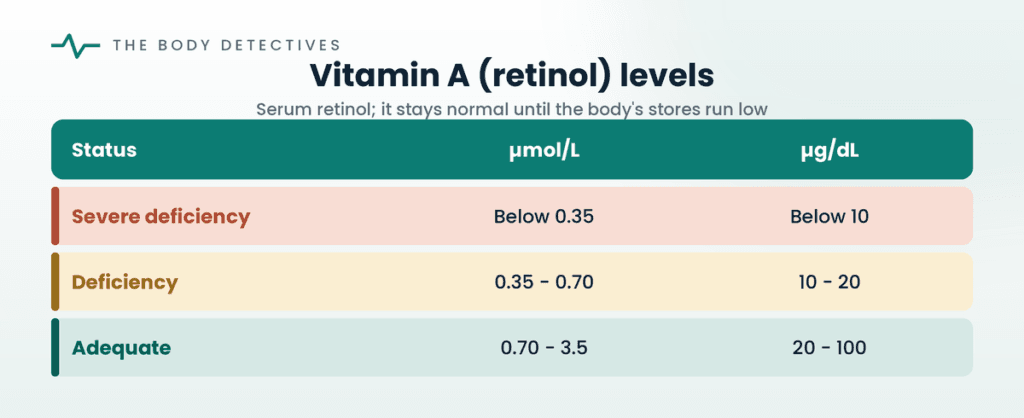
When deficiency is suspected, a blood test can measure retinol, usually in µmol/L or µg/dL.
One quirk: your body keeps blood retinol steady until its liver stores are quite depleted, so a normal result doesn’t completely rule out a marginal shortfall. Doctors usually weigh your symptoms and diet alongside the number.
Signs of vitamin A deficiency
The earliest and most classic sign is difficulty seeing in dim light or at night. As deficiency progresses, the eyes can become very dry, and in severe cases the cornea is damaged, leading to permanent blindness — still a major cause of childhood blindness in low-income regions. Other signs include more frequent infections, as immunity weakens, and dry, rough skin. Deficiency is most likely with a very poor diet or with conditions that impair fat absorption, such as coeliac or liver and pancreatic disease. A zinc deficiency can make things worse, because zinc is needed to move vitamin A out of the liver.
Why too much can be harmful
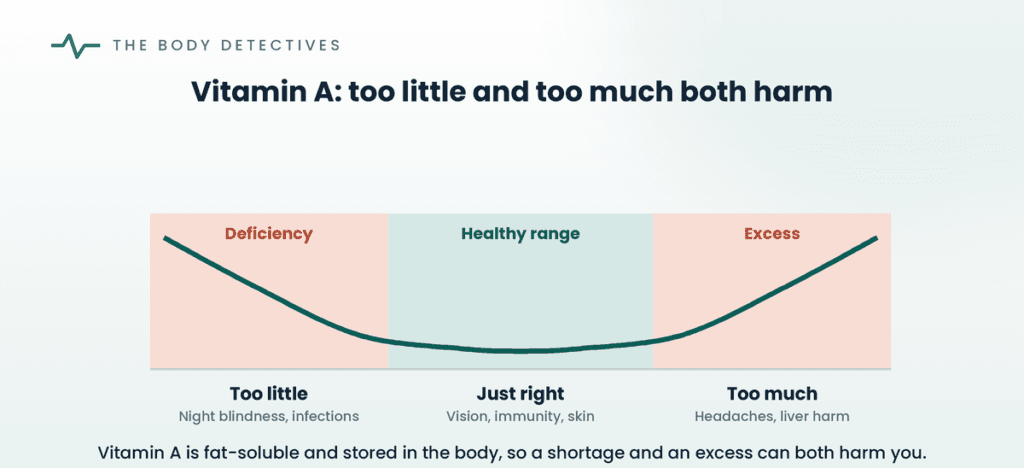
Here’s where vitamin A differs from water-soluble vitamins like vitamin C: because it’s fat-soluble, your body stores the excess rather than flushing it out, so very high intakes can build up and cause harm — a state called hypervitaminosis A.
This almost always comes from high-dose supplements or eating a lot of liver, not from everyday food. Too much can cause headaches, bone and joint pain, dry skin, hair loss, and liver damage. It matters most in pregnancy, where high doses of preformed vitamin A can harm the developing baby — which is why pregnant women are advised to avoid liver and retinol supplements. Reassuringly, beta-carotene from vegetables is safe; the body simply converts less of it, and a big excess only tints the skin slightly orange. Like vitamin D, it’s a vitamin where balance matters.
When to see a doctor
See your doctor if you notice trouble seeing in low light, persistently dry eyes, or frequent infections, especially if you have a digestive condition that affects absorption. Equally, don’t take high-dose vitamin A supplements without advice — more is not better, and it’s easy to overdo it with retinol. If you’re pregnant or planning to be, check any supplement’s vitamin A content first.
The bottom line
Vitamin A is a true all-rounder — essential for night vision, immunity, and healthy skin — and most people get plenty from a varied diet rich in colourful vegetables and some animal foods. Deficiency is serious but uncommon outside areas of poverty or malabsorption, while excess, almost always from supplements, carries its own risks. With vitamin A, the goal isn’t as much as possible, but the right amount.
This article is for general educational purposes only and is not a substitute for professional medical advice. Always consult your own doctor before taking supplements or if you are worried about a deficiency. See our Medical Disclaimer for more information.