Sodium Levels: Normal Range, High and Low
Your sodium levels say less about how much salt you eat and more about your body’s water balance. Sodium is the main electrolyte in the fluid outside your cells, and your body guards its concentration within a narrow range — because where sodium goes, water follows. A reading that’s too high or too low is usually a sign that your water and sodium have drifted out of step, not simply that you’ve had too much or too little salt. This guide explains the normal range, what high and low results mean, and why it matters.
What is a sodium blood test?
Sodium is one of your body’s key electrolytes, essential for fluid balance, nerve signals, and muscle function. It’s measured as part of almost every routine blood panel, usually alongside potassium and your kidney markers, because together they give a picture of your fluid and electrolyte health. The result reflects the concentration of sodium in your blood — that is, sodium measured relative to water.
Normal sodium levels
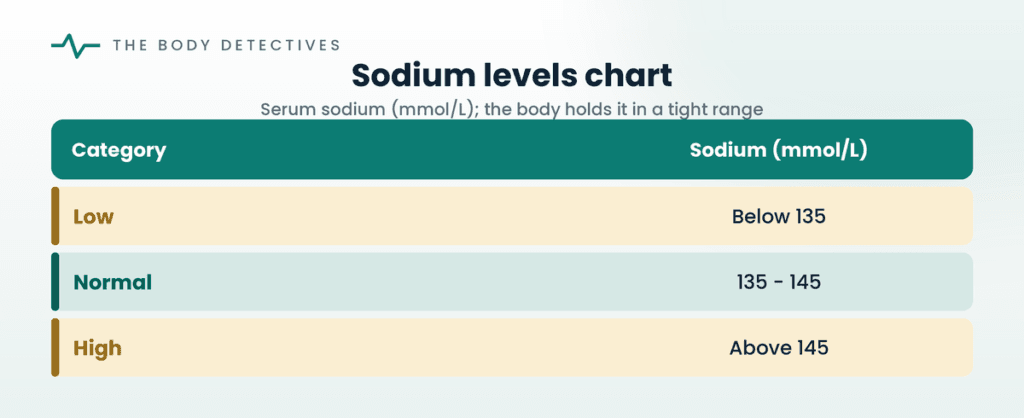
Sodium is measured in millimoles per litre (mmol/L), and the body keeps it within a remarkably tight band.
Because that range is so narrow, even small shifts are taken seriously — and they almost always reflect a change in your body’s water rather than your salt intake.
Why sodium controls your water
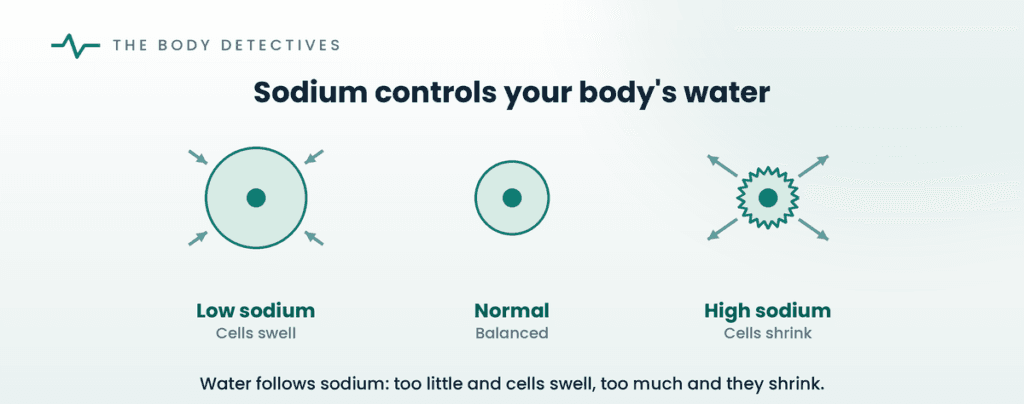
Here’s the key idea: water moves to follow sodium, trying to keep the concentration balanced on both sides of your cell membranes.
When blood sodium drops too low, water moves into your cells and they swell — a particular problem for brain cells, which have no room to expand. When sodium climbs too high, water is pulled out and cells shrink. This is why the most serious symptoms of a sodium imbalance are neurological, such as confusion or seizures.
What low sodium means (hyponatraemia)
Low sodium (hyponatraemia) is the most common electrolyte disturbance, and it’s usually a problem of too much water rather than too little salt. Causes include certain medicines (especially diuretics), heart, liver, or kidney conditions, hormonal problems that make you retain water, and occasionally drinking very large amounts of fluid. Mild cases often cause no symptoms; bigger drops can bring nausea, headache, confusion, and — when severe — seizures. For more, UCLA Health is a reliable source.
What high sodium means (hypernatraemia)
High sodium (hypernatraemia) is usually a sign of a water deficit — not enough fluid relative to sodium. It most often affects people who can’t easily drink to satisfy their thirst, such as older adults, young children, or anyone seriously unwell, as well as those losing a lot of fluid. The body’s main defence is thirst, so a healthy person with access to water rarely becomes hypernatraemic. Symptoms include intense thirst, weakness, and confusion.
Does eating salt change your sodium level?
It’s a common surprise, but a salty meal doesn’t usually raise your blood sodium reading. Your body responds by making you thirsty and adjusting how much water your kidneys keep or release, holding the concentration steady. Dietary salt matters enormously for blood pressure — and most of us eat too much — but that’s a separate issue from the sodium concentration measured in your blood.
When to see a doctor
An abnormal sodium result should always be reviewed by your doctor, who will consider your fluids, medicines, and other tests, and will often recheck it. Seek urgent help for confusion, a severe headache, marked drowsiness, or seizures alongside a known imbalance — and don’t try to “correct” a low sodium by loading up on salt, since the real issue is usually water.
The bottom line
Your sodium level is really a readout of your body’s water balance, held within a tight range by thirst and your kidneys. Most abnormal results reflect too much or too little water rather than your salt intake, and both extremes matter most because of their effect on the brain. Any result outside the range deserves a closer look with your doctor — interpreted alongside how much fluid is on board.
This article is for general educational purposes only and is not a substitute for professional medical advice. Always consult your own doctor about your blood test results. See our Medical Disclaimer for more information.