

Potassium Levels: Normal Range, High and Low
Your potassium levels rarely make headlines, but few numbers on a blood test matter more for your heart. Potassium is an electrolyte — a mineral that carries an electrical charge — and your body keeps it within a remarkably narrow range, because both too little and too much can disturb your heartbeat. This guide explains the normal range, what high and low potassium mean, and how to keep yours where it should be.
What is a potassium blood test?
Potassium is one of your body’s main electrolytes, essential for healthy cells, nerves, and especially muscles — including your heart. You get it from food, and your kidneys fine-tune the amount in your blood by removing any excess in urine. A potassium level is part of almost every routine blood panel, because it’s such an important marker of your electrolyte balance and kidney health.
Normal potassium levels
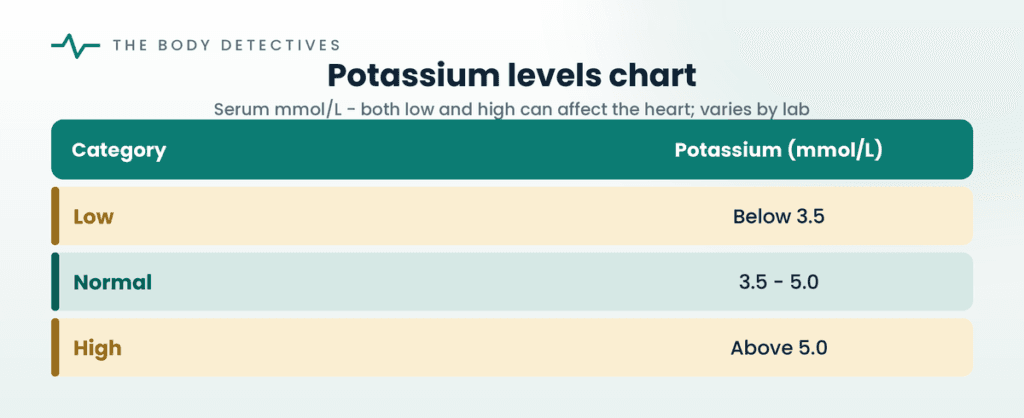
Potassium is measured in millimoles per litre (mmol/L). The healthy range is narrow, and exact cut-offs vary slightly by lab.
| Category | Potassium (mmol/L) |
|---|---|
| Low | Below 3.5 |
| Normal | 3.5–5.0 |
| High | Above 5.0 |
Notice how tight that window is — there’s little room on either side, which is why your kidneys work constantly to hold potassium steady.
Why potassium matters for your heart
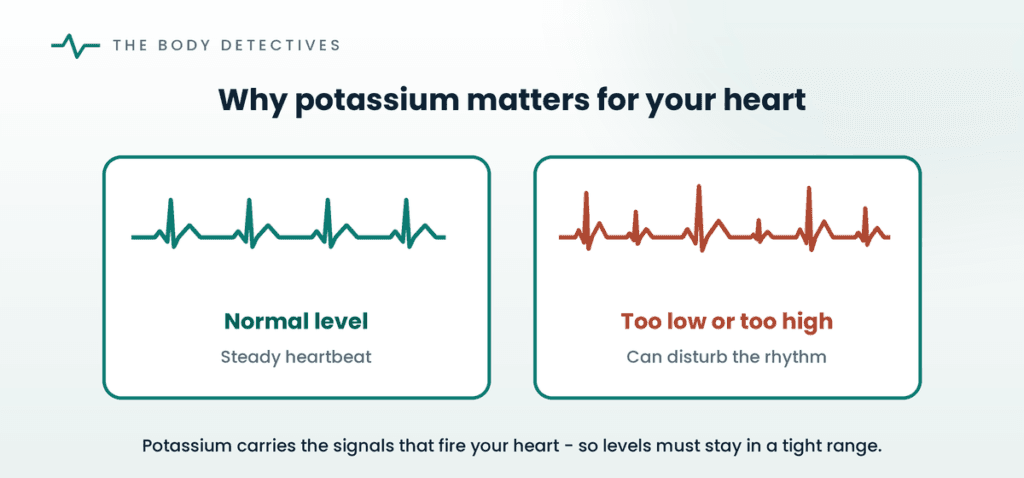
Potassium helps generate the electrical signals that make your heart beat and your muscles contract. When the level drifts too far in either direction, those signals misfire — which can cause an irregular heartbeat (arrhythmia) and, at extremes, become life-threatening. That’s why an abnormal potassium result is always taken seriously, even when you feel completely well.
What high potassium means (hyperkalaemia)
High potassium (hyperkalaemia) often causes no symptoms, so it’s frequently a surprise on a blood test. The most common cause is reduced kidney function, since the kidneys clear potassium — people with chronic kidney disease are several times more likely to have it. Certain medicines also raise it, including some blood-pressure drugs (ACE inhibitors and ARBs) and potassium-sparing diuretics. A markedly high level can affect the heart and needs urgent medical attention. For more, the American Heart Association is a reliable source. Your kidney function results are checked alongside it.
What low potassium means (hypokalaemia)
Low potassium (hypokalaemia) is usually caused by losing too much — through vomiting, diarrhoea, or water tablets (diuretics) — or by not getting enough. It can cause muscle weakness, cramps, fatigue, and palpitations. Low magnesium often goes hand in hand with low potassium and may need correcting too.
Potassium in your diet
Most healthy people can support good potassium levels with a varied diet. Rich sources include bananas, potatoes, beans and lentils, leafy greens, avocado, tomatoes, and dairy. One important caution: if you have kidney disease or take potassium-affecting medicines, don’t increase potassium — or use “low-salt” substitutes, which are high in potassium — without medical advice, and never take potassium supplements unless your doctor recommends them.
When to see a doctor
Any potassium result outside the normal range should be reviewed by your doctor, who will look at your kidney function and medicines and may repeat the test. Seek urgent help for symptoms such as a markedly irregular or racing heartbeat, severe muscle weakness, or near-fainting — especially if you have kidney disease.
The bottom line
Potassium is a quiet but critical number: your heart and muscles depend on it, and your body guards it within a tight range. Because high potassium in particular can be silent, the blood test does the watching for you. Eat a varied, potassium-rich diet if you’re healthy — but if you have kidney problems or take affecting medicines, let your doctor guide any changes.
This article is for general educational purposes only and is not a substitute for professional medical advice. Always consult your own doctor about test results or before changing your diet or supplements. See our Medical Disclaimer for more information.