Blood Oxygen Level (SpO2): What’s Normal and What Your Reading Means
If your smartwatch or a fingertip device has ever flashed a number like “98%” at you, that’s your blood oxygen level — and it’s a quick window into how well your body is being supplied with oxygen. But what counts as a normal SpO2 reading, when is it too low, and how much should you trust the number? Let’s decode it.
What is blood oxygen (SpO2)?
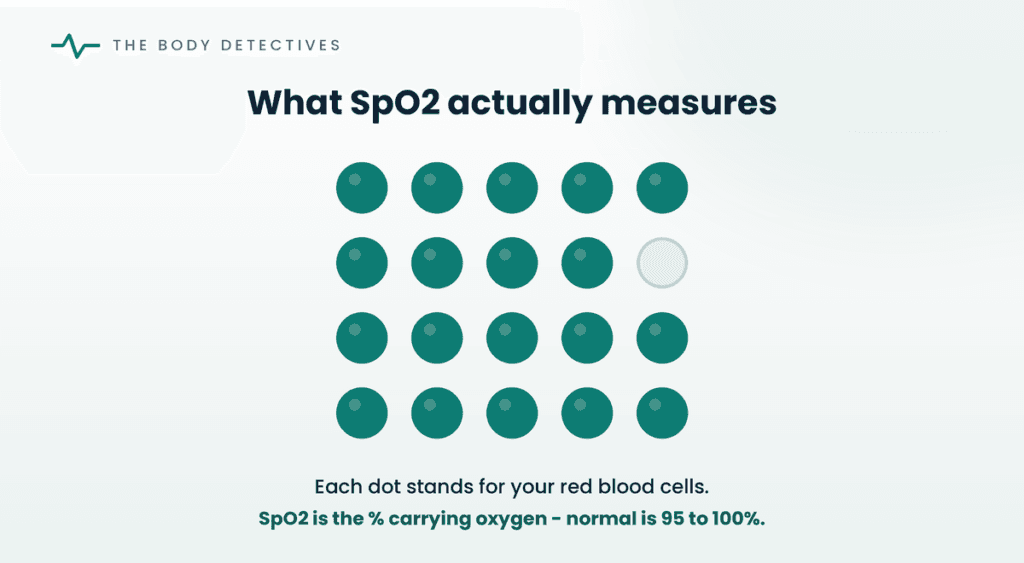
SpO2 stands for peripheral oxygen saturation — the percentage of your red blood cells that are carrying oxygen. Every time you breathe, oxygen passes into your blood and is delivered around your body. A pulse oximeter (the clip on your finger, or the sensor in a smartwatch) shines light through your skin to estimate that percentage, giving you a fast, painless reading.
Normal blood oxygen levels chart
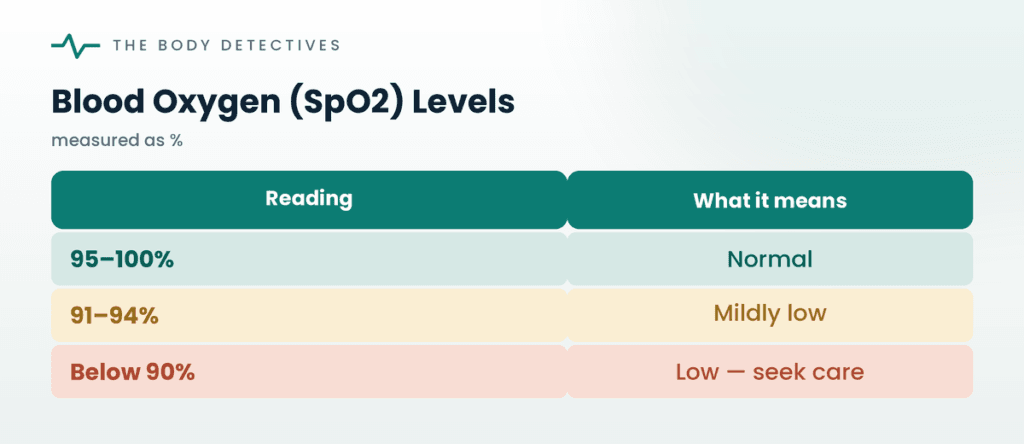
For most healthy people, here’s how SpO2 readings are generally interpreted:
| SpO2 reading | What it usually means |
|---|---|
| 95–100% | Normal |
| 91–94% | Mildly low — monitor, and seek advice if you have symptoms |
| Below 90% | Low (hypoxaemia) — seek medical attention |
One important exception: people with chronic lung conditions such as COPD often run a lower baseline, and their doctor may set a different target range (for example, 88–92%). If that’s you, follow the advice you’ve been given rather than this general guide.
What does a low blood oxygen level mean?
A low SpO2 (hypoxaemia) means your blood isn’t carrying as much oxygen as it should. It can be caused by lung problems (such as asthma, pneumonia, or COPD), heart conditions, severe anaemia, high altitude, or sleep apnoea. A reading that is genuinely and persistently low — especially below 90% — is a signal that your body needs help, and it shouldn’t be ignored.
Symptoms of low oxygen
- Shortness of breath or rapid breathing
- A fast heartbeat
- Headache, dizziness, or confusion
- Bluish lips, face, or fingertips (a sign to act urgently)
How to get an accurate reading
Pulse oximeters are convenient but not perfect, and several things can throw the number off:
- Cold hands, poor circulation, or movement during the reading
- Nail polish or artificial nails (on finger devices)
- Skin tone — research shows oximeters can overestimate oxygen levels in people with darker skin, occasionally missing a genuinely low reading
For the best result, warm your hands, stay still, remove nail polish, and look at the trend rather than a single number. Remember that smartwatch sensors are designed for general wellness, not medical diagnosis.
Can you raise your blood oxygen?
In a healthy person, oxygen levels usually take care of themselves. Things like fresh air, good ventilation, staying active, not smoking, and treating conditions such as sleep apnoea all support healthy oxygen levels. But a genuinely low SpO2 is a medical issue — it’s about finding and treating the cause, not a quick home fix.
When should you see a doctor?
See a doctor if your SpO2 is repeatedly below about 94% without an explanation, or if it drops with everyday activity. Seek emergency care immediately if your reading is below 90% with breathlessness, chest pain, confusion, or bluish lips. Your smartwatch tracks more than oxygen, so it’s worth understanding your other vitals too — see our guides to resting heart rate by age and blood pressure by age.
The bottom line
A normal blood oxygen level is 95–100%, and readings below 90% need medical attention. Pulse oximeters and smartwatches are a handy way to keep an eye on your oxygen, as long as you remember their limits and focus on trends. If your number is genuinely low or comes with symptoms, let a doctor help you find out why.
This article is for general educational purposes only and is not a substitute for professional medical advice. Always consult your own doctor about your personal health. See our Medical Disclaimer for more information.
For more, see the Cleveland Clinic‘s information on pulse oximetry.