Albumin Levels: What Low Albumin Means
Albumin levels rarely make headlines, but this single protein quietly keeps your blood where it belongs and ferries vital cargo around your body. Albumin is the most abundant protein in your blood, made entirely by your liver. When its level drops, fluid can leak out of your blood vessels and pool in your tissues — which is why low albumin often shows up as swelling. This guide explains what albumin does, what’s normal, and what high and low results mean.
What is albumin?
Albumin is a protein made by your liver and released into your blood, where it’s the most plentiful protein by far. It has two main jobs. First, it acts like a sponge that holds water inside your blood vessels, stopping fluid from leaking into the surrounding tissues. Second, it’s a transporter, carrying hormones, vitamins, calcium, bilirubin, and many medicines around the body. It’s measured as part of a routine metabolic panel or liver function tests. For more, Cleveland Clinic is a reliable source.
Normal albumin levels
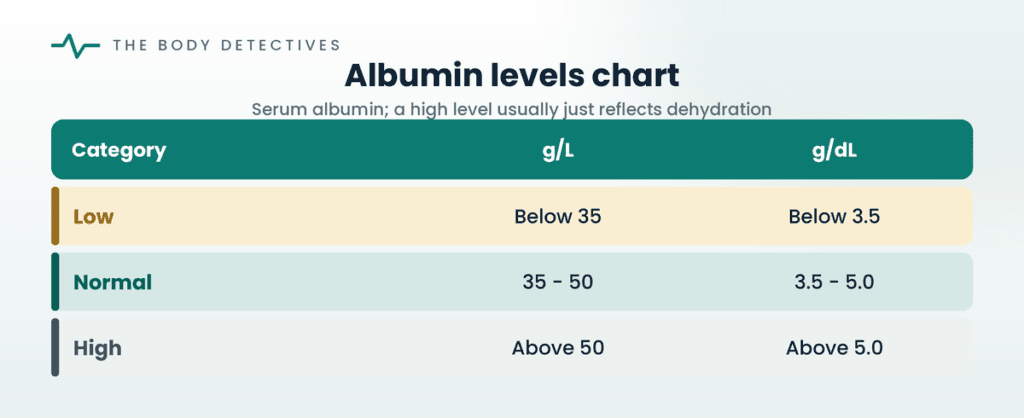
Albumin is reported in grams per litre (g/L) or grams per decilitre (g/dL).
A high albumin level isn’t usually a concern in itself — it most often simply means you’re dehydrated, which concentrates the blood. The results that matter clinically are the low ones.
Why low albumin causes swelling
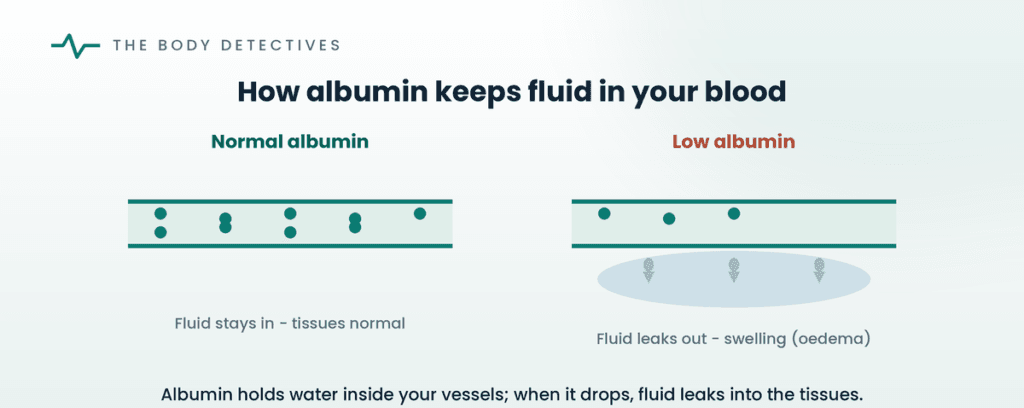
Here’s albumin’s most visible role. Because it holds water inside your vessels, a healthy level keeps fluid balanced between your blood and your tissues:
When albumin falls, that pull weakens, and fluid seeps out of the vessels into the surrounding tissues. The result is oedema — puffy swelling, often in the ankles and legs — and, when fluid collects in the abdomen, a condition called ascites. This is exactly why unexplained swelling can prompt a doctor to check your albumin.
What low albumin means (hypoalbuminaemia)
A low albumin (hypoalbuminaemia) is rarely a disease in itself — it’s a signpost to something else. The common causes fall into a few groups: the liver not making enough (as in cirrhosis), the kidneys leaking it into the urine (nephrotic syndrome), too little protein from food or poor absorption, and significant inflammation or infection, which lowers it temporarily. As a rule, the lower the level, the more likely there’s a serious underlying problem.
Albumin and your other results
Albumin rarely travels alone. Because the liver makes it, a low level alongside abnormal liver enzymes or a high bilirubin points towards liver disease. Paired with protein in the urine, it points instead to the kidneys. And because albumin dips during illness, doctors read it in context — a temporarily low level during an acute infection doesn’t carry the same weight as a persistently low one. It’s a genuinely useful all-rounder on a blood panel.
When to see a doctor
See your doctor if you notice new or worsening swelling in your legs, ankles, or abdomen, especially with fatigue, frothy urine, or yellowing of the skin. These can point to the liver or kidney problems that often underlie a low albumin. And remember that simply eating more protein won’t fix a low level if the cause is untreated — the priority is finding and addressing what’s behind it.
The bottom line
Albumin is your blood’s workhorse protein — holding fluid inside your vessels and transporting essentials around the body. A high level usually just means dehydration, but a low one is an important clue, most often pointing to your liver, your kidneys, your nutrition, or ongoing inflammation. Because it’s read alongside the rest of your results, albumin is one of the quietly informative numbers on a routine blood test.
This article is for general educational purposes only and is not a substitute for professional medical advice. Always consult your own doctor about your blood test results. See our Medical Disclaimer for more information.