Prolactin Levels: What High Prolactin Means
Prolactin levels are easy to overlook, but this pituitary hormone can quietly explain a surprising range of symptoms — from irregular periods and a low sex drive to unexplained difficulty conceiving. Prolactin’s main job is to produce breast milk, so it’s naturally high during pregnancy and breastfeeding. Outside those times, though, a raised level can throw your other hormones off balance. This guide explains what’s normal, what high prolactin means, why it happens, and when to get it checked.
What is prolactin?
Prolactin is a hormone made by your pituitary gland, a pea-sized gland at the base of your brain. Its best-known role is driving milk production after childbirth, but it also influences the reproductive system in both sexes. Unusually, prolactin is kept in check by dopamine, a brain chemical that constantly puts the brakes on its release — which is why some medicines that affect dopamine can push prolactin up. For more, Cleveland Clinic is a reliable source.
Normal prolactin levels
Prolactin is measured with a simple blood test, reported in nanograms per millilitre (ng/mL).
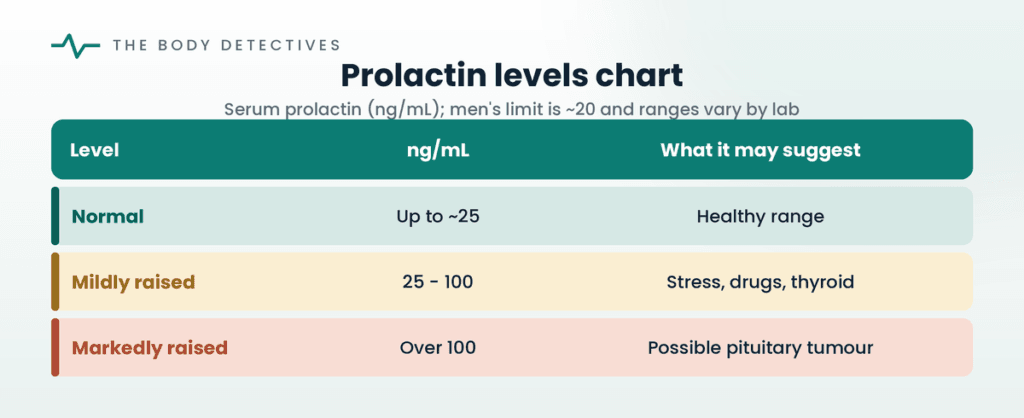
Outside pregnancy and breastfeeding, a normal level is generally under about 25 ng/mL in women and 20 ng/mL in men, though ranges vary by lab. Levels are naturally much higher — and completely normal — during pregnancy and while nursing.
What high prolactin can do
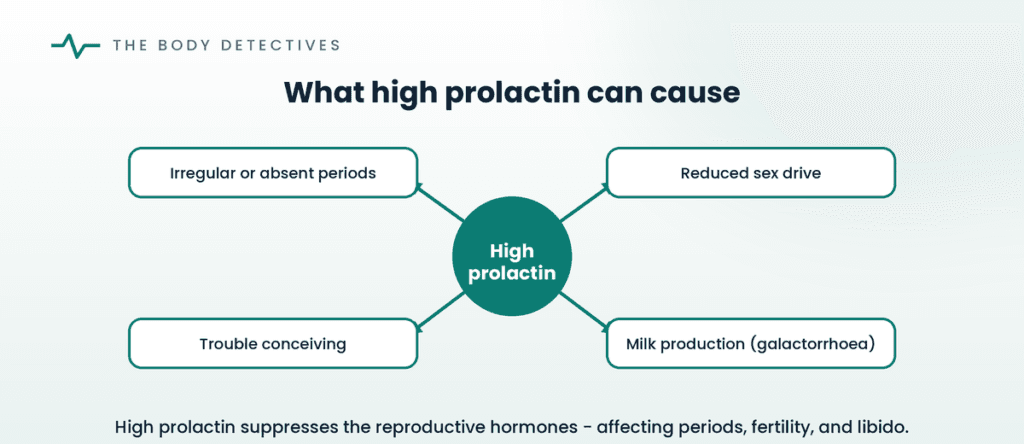
When prolactin is high at the wrong time (a state called hyperprolactinaemia), it suppresses the hormones that run your reproductive system — lowering oestrogen in women and testosterone in men. That’s what links it to so many symptoms.
In women, this can mean irregular or absent periods, reduced fertility, a low sex drive, and sometimes unexpected breast-milk production (galactorrhoea). In men, it often shows up as low libido, erectile difficulties, or reduced fertility. If a pituitary growth is the cause, it can also press on nearby structures and trigger headaches or changes in vision.
What causes high prolactin?
Plenty of everyday things nudge prolactin up briefly — stress, exercise, a recent meal, sleep, even having blood taken — which is why a single borderline result is often rechecked. Persistent elevation has a few common causes: certain medicines (especially some antipsychotics, anti-nausea drugs, and antidepressants), an underactive thyroid, and a benign pituitary growth called a prolactinoma. The thyroid link matters, because treating an underactive thyroid often brings prolactin back down on its own.
How high is high?
The level itself offers clues. Mild elevations (roughly 25 to 100 ng/mL) are most often due to medicines, stress, or thyroid problems. Markedly high levels — generally above 100, and especially above 200 ng/mL — make a prolactinoma much more likely and usually prompt a pituitary scan (MRI). The reassuring part is that even prolactinomas are almost always benign and very treatable, often with tablets alone.
When to see a doctor
See your doctor if you have irregular or missing periods, trouble conceiving, a low sex drive, unexpected milk production, or — in men — erectile problems, especially if they persist. Persistent headaches with changes in your vision alongside these symptoms deserve prompt attention. A simple blood test is the first step, and the cause is usually very manageable once it’s found.
The bottom line
Prolactin is the body’s milk hormone, and a high level outside pregnancy is a common, fixable explanation for period, fertility, and libido problems. Because everyday stress can nudge it up, one borderline result isn’t a diagnosis — but a clearly raised level is worth investigating, since the usual culprits, from medicines to an underactive thyroid to a benign pituitary growth, all respond well to treatment.
This article is for general educational purposes only and is not a substitute for professional medical advice. Always consult your own doctor about hormone tests or symptoms. See our Medical Disclaimer for more information.