

White Blood Cell Count: What High and Low Mean
Your white blood cell count is your immune system’s headcount — a measure of the cells that defend you against infection. Made in your bone marrow, white blood cells patrol your blood and tissues, hunting down bacteria, viruses, and other invaders. A count that’s too high or too low can be an early clue that something is going on, from a passing infection to a condition worth investigating. This guide explains the normal range, what high and low counts mean, and the different types of white cell.
What are white blood cells?
White blood cells, or leukocytes, are the cells of your immune system. Far fewer in number than red blood cells, they’re your body’s defence force — some swallow and destroy germs, others make antibodies or coordinate the wider immune response. They’re counted as part of a full blood count (FBC), one of the most common blood tests, often alongside your platelets and red cells. For more, Cleveland Clinic is a reliable source.
Normal white blood cell count
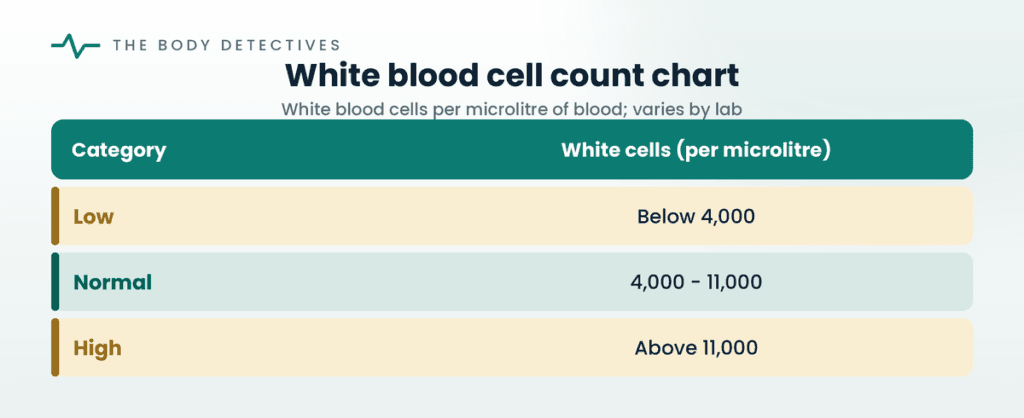
The total white cell count is reported as the number of cells per microlitre of blood.
That’s roughly 4 to 11 × 10⁹/L. The range varies a little by lab, age, and even ethnicity, and it can rise temporarily with things as ordinary as stress, hard exercise, smoking, or pregnancy — so context matters when reading the number.
The five types of white blood cell
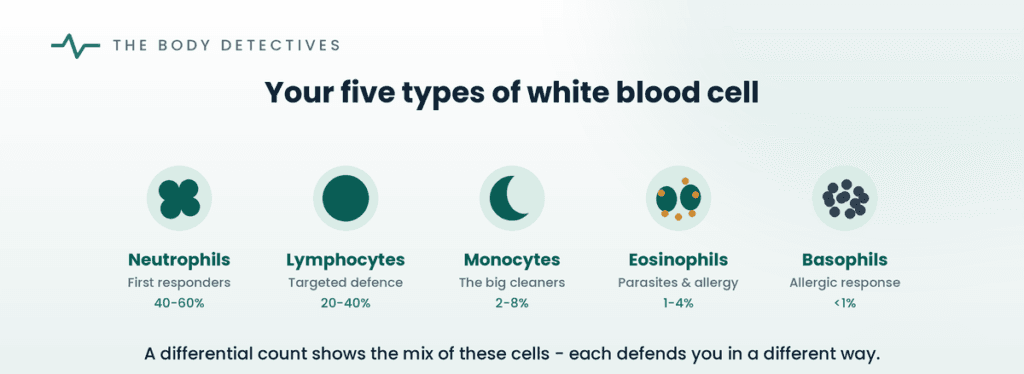
A test called a differential breaks your white cells into five types, each with its own job:
- Neutrophils are the most numerous and the first to arrive at a bacterial infection, swallowing and destroying germs.
- Lymphocytes (T cells, B cells, and natural killer cells) handle targeted, longer-term immunity and make antibodies, especially against viruses.
- Monocytes mature into macrophages that engulf germs and clear away dead cells and debris.
- Eosinophils tackle parasites and drive allergic reactions.
- Basophils release histamine in allergic and inflammatory responses.
What a high count means (leukocytosis)
A high white cell count (leukocytosis) most often reflects your body fighting an infection — bacterial infections in particular drive up neutrophils. It can also rise with inflammation, tissue damage, certain medicines (such as steroids), stress, and smoking. Less commonly, a persistently high count points to a bone-marrow condition such as leukaemia. The differential — which cell type is raised — helps point to the cause, and a high count alongside inflammation markers like CRP often suggests infection.
What a low count means (leukopenia)
A low white cell count (leukopenia) means fewer defenders and a higher risk of infection. It’s frequently driven by a drop in neutrophils and can be caused by viral infections, certain medicines, chemotherapy, autoimmune conditions such as lupus, and problems with the bone marrow itself. A mild, temporary dip after a viral illness is common and often settles on its own.
When to see a doctor
A white cell count slightly outside the range is common and frequently temporary, but it should be interpreted by your doctor alongside the rest of your blood count and your symptoms — and often simply rechecked after a while. Seek prompt advice for a very high or very low count, repeated infections, or warning signs such as unexplained fever, night sweats, easy bruising, or persistent fatigue.
The bottom line
Your white blood cell count is a quick snapshot of your immune defences. Because it shifts with everyday things like infection and stress, a single out-of-range result is rarely cause for alarm on its own — what matters is the bigger picture: the trend, the differential, and how you feel. Any result that’s markedly abnormal, or that stays abnormal, deserves a closer look with your doctor.
This article is for general educational purposes only and is not a substitute for professional medical advice. Always consult your own doctor about your blood test results. See our Medical Disclaimer for more information.