Uric Acid Levels: Normal Range, High Levels, and Gout
Your uric acid levels are usually a quiet background number — until they climb high enough to crystallise and trigger the sudden, searing pain of gout. Uric acid is a normal waste product your body makes when it breaks down purines, and most of it is filtered out by your kidneys. This guide explains what normal uric acid levels look like, what high levels (and gout) mean, and how to bring them down.
What is a uric acid test?
A uric acid blood test (serum urate) measures how much uric acid is circulating in your blood. Uric acid forms when your body breaks down purines — substances found in your own cells and in many foods. Normally it dissolves in the blood, travels to the kidneys, and leaves in your urine. Problems start when you either make too much or clear too little, and the level creeps up.
Normal uric acid levels
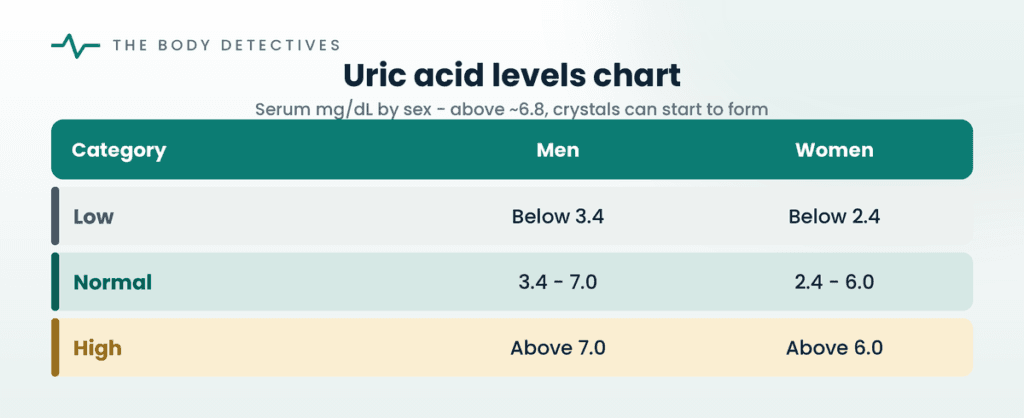
Uric acid is reported in mg/dL (or µmol/L), and healthy ranges differ by sex — women tend to run lower because oestrogen helps the kidneys clear urate, which is why levels often rise after menopause.
| Category | Men (mg/dL) | Women |
|---|---|---|
| Low | Below 3.4 | Below 2.4 |
| Normal | 3.4–7.0 | 2.4–6.0 |
| High | Above 7.0 | Above 6.0 |
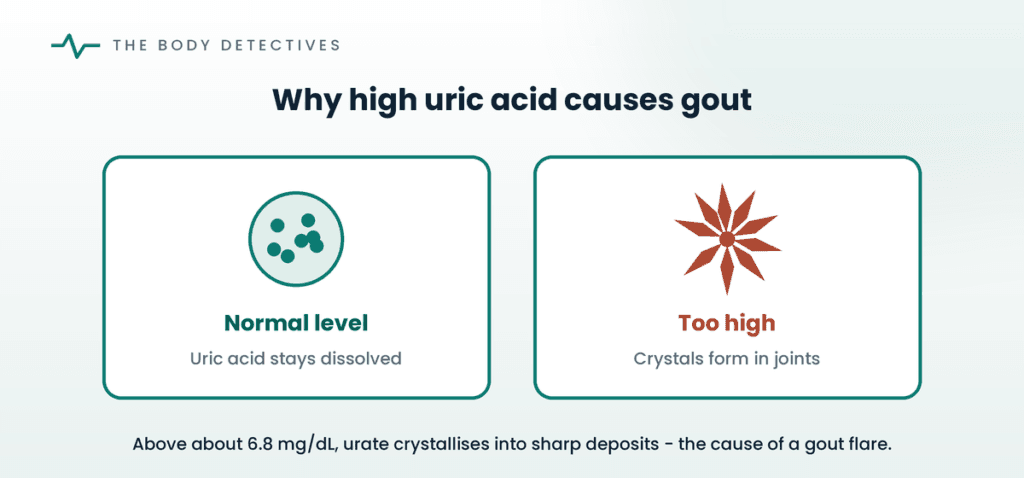
One number matters for everyone: at around 6.8 mg/dL, blood becomes saturated with urate and crystals can begin to form — which is why gout specialists often aim to keep levels below 6.0 mg/dL.
Why high uric acid causes gout
When uric acid stays above the saturation point, it can turn into sharp, needle-like crystals that settle in joints — classically the big toe. Your immune system attacks these crystals, producing the intense pain, redness, and swelling of a gout flare. The same crystals can also build up as kidney stones.
What high uric acid means (hyperuricaemia)
A high uric acid level is called hyperuricaemia. Common drivers include a diet rich in red meat, organ meats, and shellfish; alcohol (especially beer); sugary drinks high in fructose; being overweight; certain medicines such as water tablets (diuretics); and reduced kidney clearance. Importantly, most people with a high level never develop gout — but it does raise the risk, along with kidney stones, and it often travels with high blood pressure and metabolic syndrome. Your kidney function and cholesterol results add useful context.
What low uric acid means
Low uric acid (below about 2 mg/dL) is uncommon and usually harmless. It can occur with certain genetic conditions, some medicines, or when the kidneys flush out more than usual. It rarely needs treatment on its own.
How to lower your uric acid
If your level is high, lifestyle changes can make a real difference:
- Cut back on purine-heavy foods — red and organ meats, and shellfish
- Limit alcohol, especially beer, and sugary (fructose) drinks
- Lose excess weight gradually — crash diets can temporarily raise uric acid
- Stay well hydrated to help your kidneys flush out urate
- Favour low-fat dairy, vegetables, and cherries, which are linked to lower levels
If you have recurrent gout or very high levels, your doctor may prescribe urate-lowering medicine (such as allopurinol) to keep you safely below target. For more on uric acid and gout, the Arthritis Foundation is a reliable source.
When to see a doctor
See your doctor if you have a sudden, very painful, hot, swollen joint (especially the big toe), or repeated attacks — these need proper diagnosis and treatment. It’s also worth reviewing a persistently high uric acid result even without symptoms, particularly if you’ve had kidney stones or have other heart and metabolic risk factors.
The bottom line
Uric acid is a normal waste product that only causes trouble when it builds up and crystallises. Knowing your number — and the 6.8 mg/dL saturation line — helps you act early: a lighter purine load, less alcohol and sugar, a healthy weight, and good hydration all help keep uric acid in a safe range and your joints pain-free.
This article is for general educational purposes only and is not a substitute for professional medical advice. Always consult your own doctor about test results or before making changes to your health routine. See our Medical Disclaimer for more information.