Insulin Resistance: Signs, Causes, and How to Reverse It
Insulin resistance is one of the most important — and most overlooked — signals in metabolic health, often building silently for years before it ever shows up on a standard blood test. It happens when your cells stop responding properly to insulin, the hormone that moves sugar out of your blood and into your cells. This guide explains what insulin resistance is, its signs and causes, how it’s measured, and the genuinely effective steps you can take to reverse it.
What is insulin resistance?
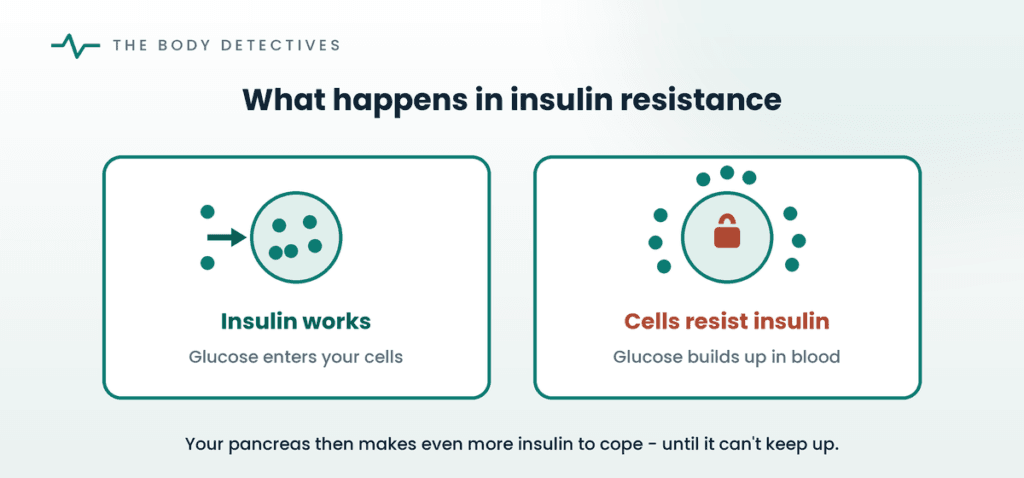
Insulin resistance means the cells in your muscles, fat, and liver don’t respond well to insulin. To compensate, your pancreas pumps out more and more insulin to force glucose into those cells. For a while this keeps your blood sugar normal — which is exactly why insulin resistance can hide for years. Eventually the pancreas can’t keep up, blood sugar starts to rise, and you move into prediabetes and then type 2 diabetes.
Signs of insulin resistance
Insulin resistance often has no obvious symptoms early on. When signs do appear, they can include:
- A larger waistline — excess fat around the middle is closely tied to it
- Fatigue, especially after meals
- Strong cravings for carbohydrates and sugar
- Darkened, velvety patches of skin (acanthosis nigricans), often on the neck or armpits
- Skin tags
- Higher blood pressure and triglycerides, with low “good” HDL cholesterol
Because the early stage is so quiet, it’s frequently picked up through related blood results rather than symptoms.
What causes insulin resistance?
The two biggest drivers are excess body fat — particularly visceral fat around your organs — and a lack of physical activity. Other contributors include a family history of type 2 diabetes, certain medicines (such as steroids), poor sleep, and chronic stress. It also travels with a cluster of conditions known as metabolic syndrome (a large waist, high blood pressure, high triglycerides, low HDL, and raised blood sugar) and with fatty liver disease.
How is insulin resistance measured?
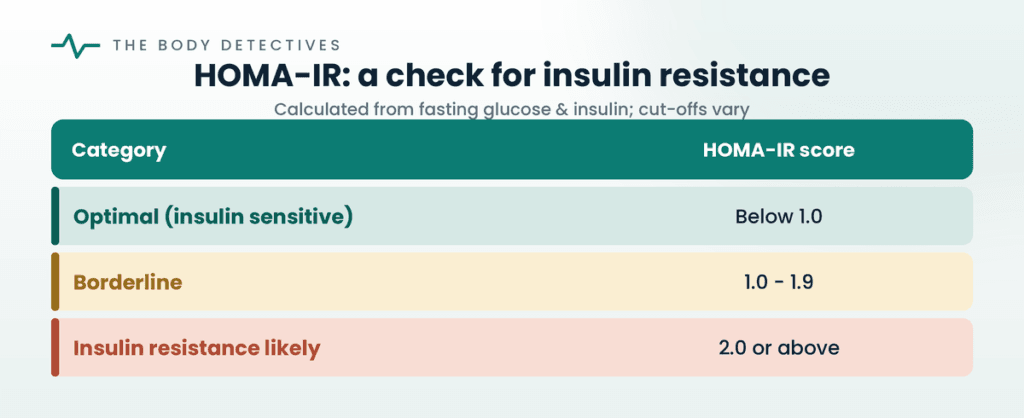
There’s no single routine test for insulin resistance, so doctors usually piece it together from your fasting glucose, HbA1c, triglycerides, HDL, waist size, and blood pressure. One research-based number, HOMA-IR, estimates it from a single fasting glucose and insulin sample:
HOMA-IR = fasting insulin (µIU/mL) × fasting glucose (mg/dL) ÷ 405
| Category | HOMA-IR score |
|---|---|
| Optimal (insulin sensitive) | Below 1.0 |
| Borderline | 1.0–1.9 |
| Insulin resistance likely | 2.0 or above |
Cut-offs vary between labs and populations, and HOMA-IR isn’t part of a standard check-up — treat it as a guide and discuss it with your doctor.
Why it matters
Insulin resistance is the engine behind type 2 diabetes, and it also raises your risk of heart disease, stroke, and fatty liver — often long before blood sugar looks abnormal. The encouraging part is that it’s one of the most reversible problems in medicine, especially when caught early. Keeping an eye on your blood sugar and cholesterol can help you spot it sooner.
How to reverse insulin resistance
You have real influence here. The most effective steps are:
- Lose excess weight — even 5–7% of your body weight markedly improves insulin sensitivity
- Move more — regular aerobic activity helps your cells take up glucose
- Build muscle — muscle is your body’s biggest glucose “sink”
- Improve your diet — favour whole foods, fibre, and protein over refined carbohydrates and sugary drinks
- Prioritise sleep and manage stress, which both affect blood sugar
In the landmark Diabetes Prevention Program, people who lost 5–7% of their weight and stayed active sharply cut their risk of developing type 2 diabetes. For a clear overview of insulin resistance and prediabetes, NIDDK is a reliable source.
When to see a doctor
It’s worth speaking to your doctor if you carry extra weight around your middle, have a family history of type 2 diabetes, or notice signs like darkened skin patches or constant carb cravings. Simple blood tests — fasting glucose and HbA1c — can flag the problem early, when lifestyle changes are most powerful.
The bottom line
Insulin resistance is your body’s early warning that its glucose system is under strain, and it usually develops quietly. You don’t need a special test to act on it: a healthy weight, regular movement, more muscle, and a whole-food diet can restore insulin sensitivity and dramatically lower your long-term risk — often before any diagnosis is ever made.
This article is for general educational purposes only and is not a substitute for professional medical advice. Always consult your own doctor about test results or before making changes to your health routine. See our Medical Disclaimer for more information.