D-dimer: The Blood Test That’s Best When It’s Normal
A D-dimer is one of those blood tests that is most useful precisely when it comes back normal. It measures a tiny protein fragment that appears whenever a blood clot forms and then breaks down in your body — so a raised level can be an early clue that a clot is present somewhere. But its real strength lies the other way round: a normal D-dimer is very good at telling doctors that a dangerous clot is unlikely. Here is what a D-dimer is, what high and low results mean, and why a raised one is not always the alarm it first seems.
What a D-dimer measures
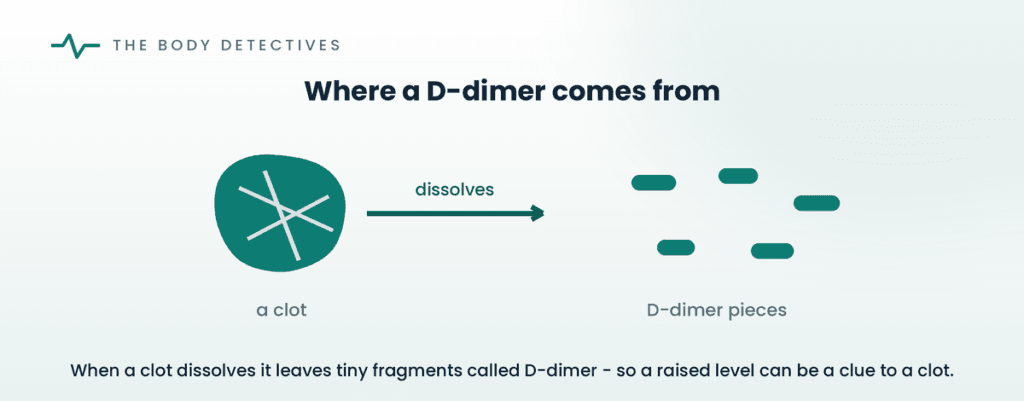
Whenever your body makes a blood clot, it later dismantles it again as part of normal housekeeping. As the clot is broken down, it releases small protein fragments into the blood — and the D-dimer is one of them. So the test is really measuring the debris left behind by clot activity: the more clotting and breakdown going on, the higher your D-dimer climbs. The diagram below shows where it comes from.
Why a normal result is so useful
Doctors lean on the D-dimer mainly as a “rule-out” test for two dangerous clots: a deep vein thrombosis (DVT), usually in the leg, and a pulmonary embolism (PE), a clot that has travelled to the lungs. The logic is simple. If you genuinely had one of these clots, your D-dimer would almost certainly be raised — so a normal result, in someone at low or moderate risk, makes a serious clot very unlikely and can spare them a scan. It is one of the rare tests whose negative answer is the powerful one.
Why a high D-dimer is not the whole story
A raised D-dimer is far less clear-cut, because it is non-specific — plenty of everyday situations push it up without any dangerous clot at all. The chart below shows the usual suspects.
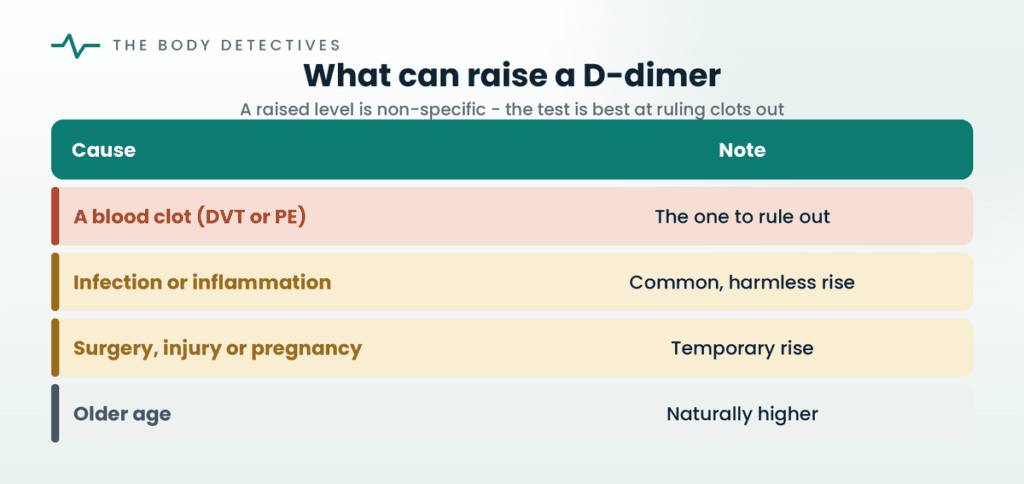
Infection, inflammation, recent surgery, injury, pregnancy and simply getting older can all raise a D-dimer. Like other broad markers such as CRP and the ESR, it flags that something is happening without pinning down what. That is why a high result is not a diagnosis: it is a signal that usually leads to a scan, such as an ultrasound of the leg or a CT of the lungs, to look directly for a clot.
When to see a doctor
You will not usually request a D-dimer yourself — it is ordered when a clot is already being considered. The symptoms that matter are the ones that prompt the test in the first place: a painful, swollen, warm calf, which can signal a DVT; or sudden breathlessness, chest pain that is worse when you breathe in, or coughing up blood, which can signal a PE. These need urgent assessment, not a wait-and-see approach. If you have them, treat it as an emergency rather than something to look into at leisure.
The bottom line
The D-dimer is a clever “rule-out” tool rather than a “rule-in” one. Its great strength is reassurance: a normal level makes a dangerous clot unlikely. A raised level, by contrast, is non-specific and simply earns you a closer look. So if your D-dimer comes back high, try not to panic — far more often it reflects something ordinary than a clot, and the next test usually settles the question.
This article is for general educational purposes only and is not a substitute for professional medical advice, diagnosis or treatment. If you have symptoms of a blood clot, such as a swollen, painful leg or sudden breathlessness, seek urgent medical care. Always speak to your own doctor about your results. See our Medical Disclaimer for more information.