
Albumin: The Blood Protein That Reflects Your Overall Health
Albumin is the most abundant protein in your blood, and although it rarely gets a headline of its own, it turns up on almost every routine blood panel. It is made entirely by your liver, and it does two quietly essential jobs: it keeps fluid where it belongs, inside your blood vessels, and it ferries all sorts of cargo around the body. That is what makes albumin so useful — it is less a test for one disease and more a barometer of how your liver, your nutrition and your general health are doing. Here is what albumin does, why a low level matters, and when it is worth a closer look.
What albumin does
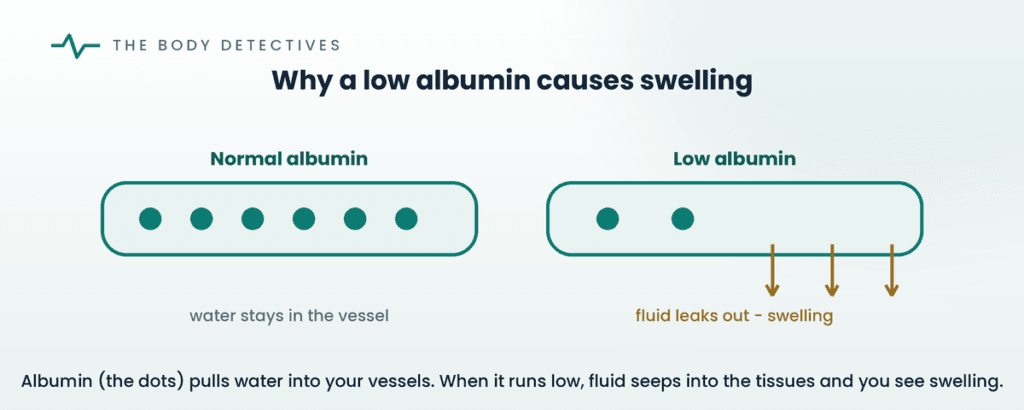
Albumin has two main jobs. The first is to hold water inside your blood vessels: rather like a sponge, it draws fluid in and stops it leaking out into the surrounding tissues. The second is transport — albumin works as a courier, carrying hormones, vitamins, calcium and many medicines through the bloodstream to where they are needed. That carrying role even shapes other tests: because much of your blood calcium travels stuck to albumin, a low albumin can make a calcium result look falsely low, which is why doctors often adjust the calcium figure for the albumin level. The diagram below shows why that first job — holding fluid in — matters so much.
Why a low albumin matters
Because albumin holds fluid in the vessels, a low level lets that fluid escape into the tissues — which is why one of the first signs of a low albumin is swelling, often around the ankles or the abdomen. A low result is also one of the most useful general signals in medicine: it tends to fall whenever the body is dealing with serious or long-standing illness, so doctors often read it as a rough barometer of overall health rather than a test for any single disease. The chart below shows the usual reasons it drops.
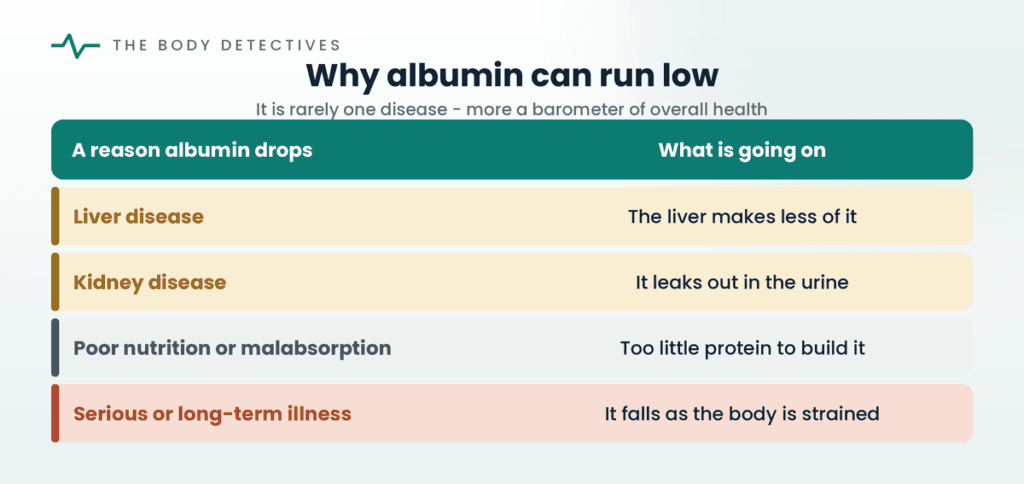
The common causes fall into a few groups. A struggling liver may simply not make enough, the same kind of problem that can show up as raised liver enzymes. Diseased kidneys may leak albumin into the urine, which is part of what a kidney function test looks for. And when protein is in short supply — through poor nutrition, malabsorption or the strain of a major illness or infection — there is simply too little raw material to keep levels up.
When to see a doctor
You will not usually ask for an albumin test on its own; it comes bundled into routine and liver panels. What is worth acting on are the symptoms a low level can produce: persistent swelling of the legs, ankles or tummy, unexplained weight loss, or the general signs of liver or kidney trouble such as yellowing skin, very dark urine or frothy urine. A high albumin, by contrast, is almost always just dehydration and settles once you drink enough. If a result is flagged as low, your doctor will read it alongside the rest of the panel rather than in isolation.
The bottom line
Albumin is a quiet all-rounder: a liver-made protein that keeps fluid in your vessels and carries cargo around the body. Its value as a test lies in that very breadth — a low level is rarely the whole story, but it is a reliable hint that the liver, the kidneys, your nutrition or your overall health deserve a closer look. Read it as a prompt to see the bigger picture, not a diagnosis on its own.
This article is for general educational purposes only and is not a substitute for professional medical advice, diagnosis or treatment. If you notice persistent swelling or other symptoms that concern you, or you have questions about your blood results, always speak to your own doctor. See our Medical Disclaimer for more information.