Vitamin C: What It Really Does (and the Cold Myth)
Vitamin C may be the most famous nutrient of all — the one people reach for at the first sniffle and pour into their morning orange juice. It is genuinely important: your body cannot make it, cannot store much of it, and needs a fresh supply every day to build skin, heal wounds and keep the immune system running. But it is also one of the most oversold, wrapped in claims it cannot quite live up to. Here is what vitamin C really does, what the evidence says about colds, and why, past a certain point, more is simply not better.
What vitamin C actually does
Vitamin C earns its keep in a few concrete ways. Its most important role is helping build collagen — the protein that forms your skin, blood vessels and connective tissue, and that knits wounds back together. It also acts as an antioxidant, helps the immune system work properly, and markedly improves how much iron you absorb from plant foods — which is why a squeeze of lemon over a plate of greens does more than add flavour. Because your body cannot make vitamin C or hold on to much of it, you need a little from food every day.
The truth about vitamin C and colds
This is where the hype outruns the science. Despite generations of belief, the evidence is clear: for most people, taking vitamin C does not stop you catching a cold. Taking it regularly may trim a cold’s length very slightly, but starting a big dose once you already feel ill does little at all. The chart below separates the familiar claims from what the research actually shows.
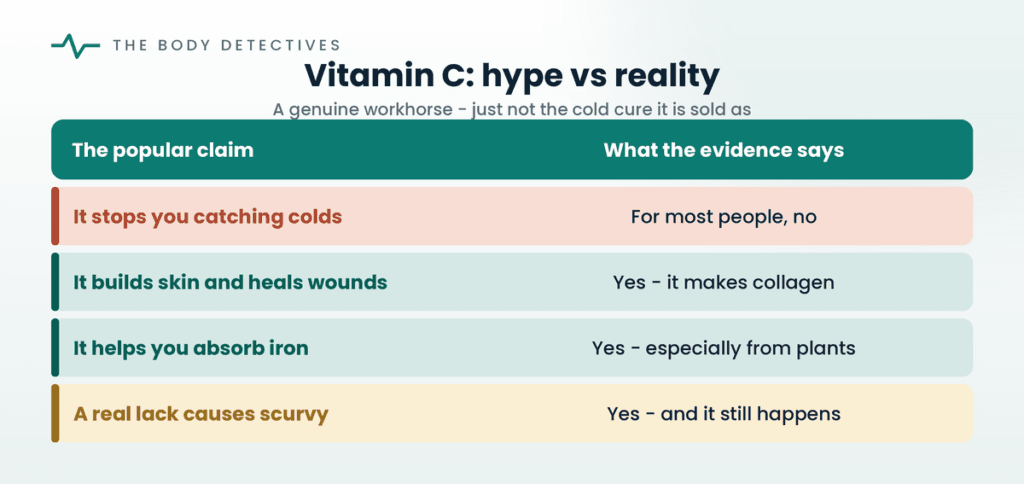
None of this makes vitamin C useless — far from it. It simply means its everyday jobs, quietly done, matter far more than the dramatic ones it is credited with. A steady, adequate intake is what keeps the system working; a large dose at the first sneeze is mostly wishful thinking.
Why more isn’t better
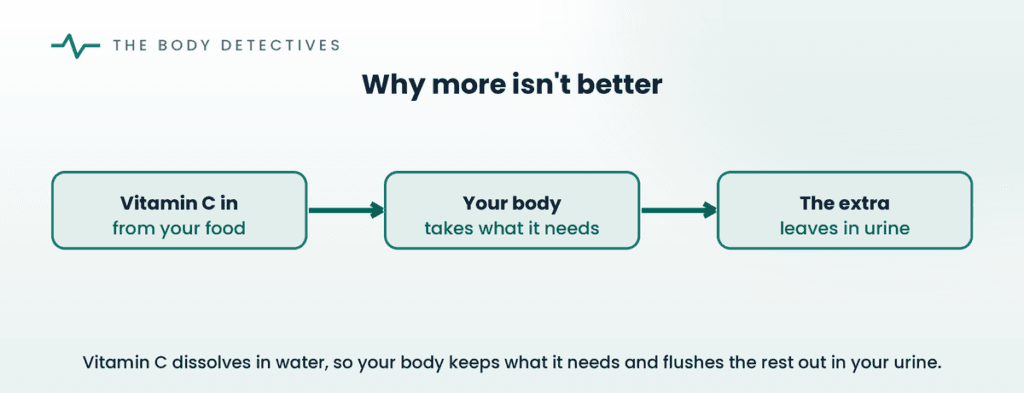
Vitamin C is water-soluble, which has a neat consequence: your body takes what it needs and flushes the rest out in your urine. Once you are getting enough — roughly 90 mg a day for men and 75 for women, easily covered by a normal diet — swallowing far more does not top you up, it simply makes for expensive urine. Very high doses (above 2,000 mg a day) can even backfire, causing stomach upset and diarrhoea. The diagram below shows what happens to the excess.
When to see a doctor
True vitamin C deficiency is uncommon now, but it still happens — mostly in people with very limited diets, heavy smokers, or those with certain illnesses. Left long enough it becomes scurvy, whose warning signs are worth knowing: easy bruising, bleeding or swollen gums, wounds that heal slowly, and unusual tiredness or joint aches. If you notice these, or you rely heavily on plant foods for iron and struggle with low iron, it is worth a chat with your doctor rather than a trip to the supplement aisle.
The bottom line
Vitamin C is essential, but it is a workhorse, not a miracle. It builds collagen, supports immunity and helps you absorb iron — real, everyday value that a varied diet of fruit and vegetables delivers with ease. What it will not do is reliably fend off colds, and beyond what your body can use, the surplus simply washes away. Eat the rainbow, and you have almost certainly got this one covered.
This article is for general educational purposes only and is not a substitute for professional medical advice, diagnosis or treatment. If you have symptoms such as bleeding gums, easy bruising or persistent tiredness, or you are considering high-dose supplements, speak to your own doctor first. See our Medical Disclaimer for more information.