Resting Heart Rate by Age: What’s Normal and What Your Number Means
Your resting heart rate is one of the simplest — and most revealing — numbers your body gives you. With a finger on your wrist or a glance at your smartwatch, you get an instant clue about how hard your heart is working and how fit you are. But what counts as a normal resting heart rate by age, and what does your number actually mean? Let’s decode it.
What is resting heart rate?
Your resting heart rate (RHR) is the number of times your heart beats per minute (bpm) while you are awake, calm, and at rest — not after climbing stairs or drinking your morning coffee. It reflects how efficiently your heart pumps blood when your body is not under stress. As a general rule, a lower resting heart rate means your heart is working more efficiently, which is often a sign of good cardiovascular fitness.
What is a normal resting heart rate?
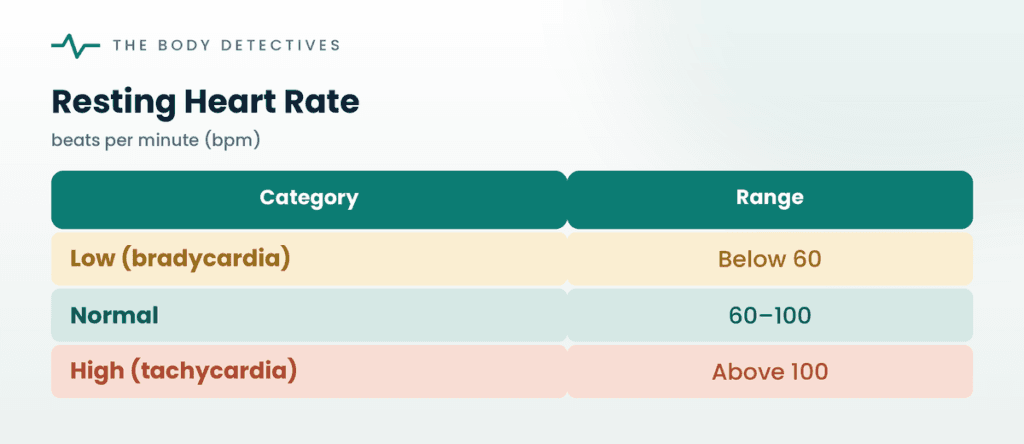
For most healthy adults, a normal resting heart rate falls between 60 and 100 beats per minute. But “normal” is not one-size-fits-all. Highly active people and trained athletes often have resting heart rates between 40 and 60 bpm, simply because their hearts are strong enough to pump more blood with each beat. Children naturally have faster heart rates than adults.
Resting heart rate by age (chart)
Heart rate is highest in newborns and gradually settles as we grow. Here are the approximate normal resting heart rate ranges by age:
| Age group | Normal resting heart rate (bpm) |
|---|---|
| Newborn (0–1 month) | 70–190 |
| Infant (1–11 months) | 80–160 |
| Toddler (1–2 years) | 80–130 |
| Preschooler (3–4 years) | 80–120 |
| Child (5–6 years) | 75–115 |
| Child (7–9 years) | 70–110 |
| 10 years and older & adults | 60–100 |
| Well-trained adult athletes | 40–60 |
Note: these ranges are approximate and can vary between individuals and sources. In adults, age alone does not change the healthy range much — fitness, medications, and overall health matter far more.
What does a low resting heart rate mean?
A resting heart rate below 60 bpm is called bradycardia. For many people — especially those who are physically fit — this is completely healthy and even desirable; their efficient hearts simply do not need to beat as often. However, a low heart rate can occasionally signal a problem, particularly if it comes with symptoms such as dizziness, fatigue, fainting, or shortness of breath. If your heart rate is unusually low and you feel unwell, it is worth getting checked.
What does a high resting heart rate mean?
A consistently high resting heart rate — generally above 100 bpm at rest, called tachycardia — means your heart is working harder than it should while you are resting. Common and harmless causes include caffeine, stress, anxiety, dehydration, recent exercise, or simply being out of shape. But a persistently elevated resting heart rate can also be linked to thyroid problems, anemia, fever, or heart conditions. Research has even connected a higher resting heart rate over time to a greater risk of cardiovascular problems — which is why it is a number worth paying attention to.
How to measure your resting heart rate correctly
- Measure first thing in the morning, before getting out of bed, or after at least 5–10 minutes of rest.
- Avoid measuring right after caffeine, exercise, or stress.
- To check manually, place two fingers (not your thumb) on your wrist or the side of your neck, count the beats for 30 seconds, and multiply by two.
- Smartwatches and fitness trackers (such as Apple Watch, Fitbit, Garmin, or an Oura ring) measure this automatically and show your trend over time — often a more useful picture than a single reading.
What affects your resting heart rate?
Many everyday factors can raise or lower your number, including fitness level (fitter usually means lower), stress and emotions, caffeine and nicotine, certain medications, dehydration, body temperature, sleep quality, and even hot, humid weather. This is why a single high reading is rarely a reason to panic — your trend over days and weeks tells you far more than any one moment.
How to lower your resting heart rate naturally
If your resting heart rate is on the higher side, these evidence-based habits can help bring it down over time:
- Move regularly — aerobic exercise such as walking, cycling, or swimming strengthens your heart.
- Manage stress through breathing exercises, mindfulness, or better sleep.
- Stay well hydrated.
- Cut back on caffeine and avoid smoking.
- Maintain a healthy weight.
Improvements usually take weeks of consistency, not days.
When should you see a doctor?
See a healthcare professional if you notice any of the following:
- A resting heart rate that is consistently above 100 bpm, or below 60 bpm if you are not an athlete.
- Palpitations, or a racing or irregular heartbeat.
- Dizziness, fainting, chest pain, or breathlessness.
- A sudden, unexplained change in your usual heart rate.
These can have simple explanations — but they can also be your body’s way of flagging something that deserves attention.
The bottom line
Your resting heart rate is a quick, free window into your heart health. For most adults, 60–100 bpm is normal, and lower (within reason) usually means a fitter heart. Track your number over time, pay attention to changes, and remember that context is everything. If your number worries you or comes with symptoms, let a doctor help you interpret it in light of your full health picture.
This article is for general educational purposes only and is not a substitute for professional medical advice. Always consult your own doctor about your personal health. See our Medical Disclaimer for more information.
For more, see the American Heart Association‘s guidance on heart rate.