Vitamin A: The Vitamin You Can Have Too Much Of
Vitamin A is a nutrient of contrasts. It gives you night vision, keeps your immune system sharp and helps your skin and cells renew — yet it is also one of the very few vitamins you can genuinely take too much of. Where a surplus of something like vitamin C simply washes away, vitamin A is fat-soluble and banks itself in your liver, so an excess can build up and cause real harm. That single fact — essential, but with a ceiling — is the key to understanding it. Here is what vitamin A does, the two forms it comes in, and why more is not always safer.
What vitamin A does
Vitamin A’s most famous role is vision, and night vision in particular: it is a building block of the light-sensing pigment in your retina, which is why the earliest sign of a serious shortage is difficulty seeing in dim light. Beyond the eyes, it keeps your immune defences working, supports the healthy turnover of skin and the cells that line your body, and is essential for growth and reproduction. Like vitamin D, it is fat-soluble — a detail that matters enormously once we start talking about dose.
The two kinds of vitamin A
Not all vitamin A is the same, and the difference is the whole safety story. The diagram below shows the two routes it takes into your body.
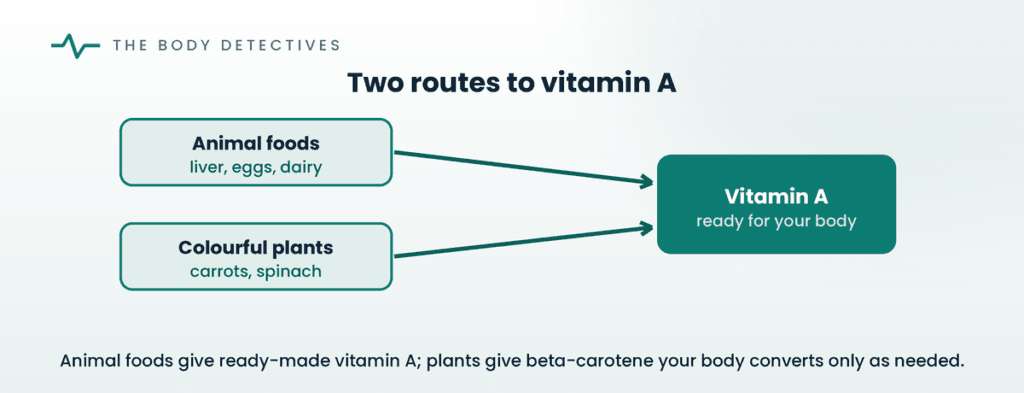
“Preformed” vitamin A (retinol) comes ready-made in animal foods — liver, oily fish, eggs and dairy — and your body can use it straight away. “Provitamin A” (mostly beta-carotene) comes from colourful plants such as carrots, sweet potato and spinach, and your body converts only as much as it needs. That distinction is crucial: the ready-made form is the one that can accumulate to harmful levels, while the plant form is largely self-limiting — at worst, a big excess of beta-carotene turns your skin faintly orange, which is harmless and fades on its own.
The vitamin you can overdose on
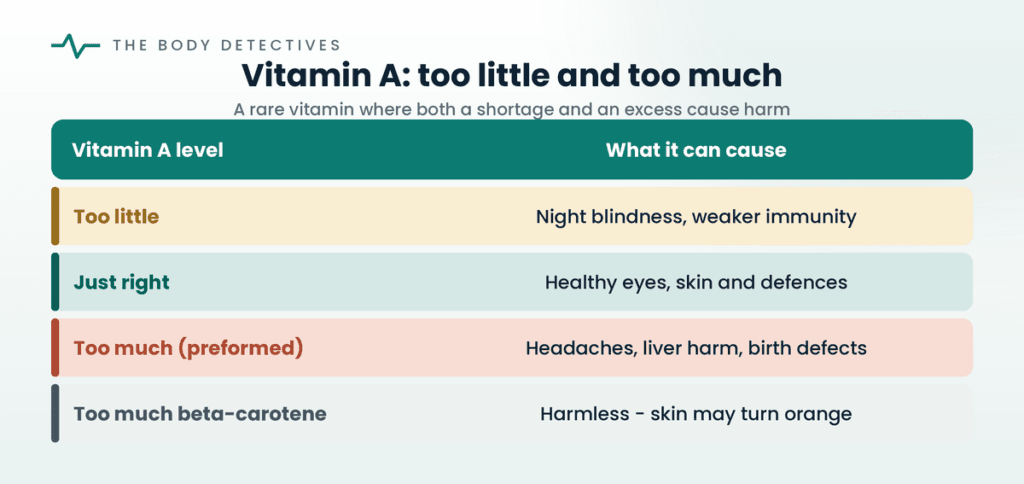
Because preformed vitamin A is stored rather than flushed away, taking too much — usually from high-dose supplements or eating liver very often — can cause headaches, blurred vision, nausea, aching muscles and, over time, liver and bone damage. The most important warning concerns pregnancy: too much preformed vitamin A can cause serious birth defects, which is why pregnant women are advised to avoid liver and any high-dose vitamin A supplement. The chart below shows how both too little and too much cause trouble.
When to see a doctor
For most people eating a varied diet, vitamin A looks after itself and needs no supplement at all. Worth a conversation with your doctor are difficulty seeing in low light or very dry eyes, which can signal a shortage, or headaches and nausea in someone taking high-dose supplements, which can signal the opposite. If you are pregnant or planning to be, check that any multivitamin is made for pregnancy and steer clear of liver — and if you smoke, avoid high-dose beta-carotene supplements, which have been linked to a higher lung cancer risk. As ever, food first is the safest rule.
The bottom line
Vitamin A is essential and, for most of us, easy to get — a diet with colourful vegetables and the odd egg or bit of dairy covers it comfortably. What sets it apart from many vitamins is that it has a genuine upper limit: because the ready-made form is stored in the liver, more is not automatically better and can, in excess, do harm. Lean on plants for your vitamin A, be cautious with high-dose supplements and liver, and take particular care in pregnancy — and this powerful little nutrient will do only good.
This article is for general educational purposes only and is not a substitute for professional medical advice, diagnosis or treatment. If you are pregnant, considering vitamin A supplements, or have symptoms such as poor night vision or persistent headaches, speak to your own doctor before making changes. See our Medical Disclaimer for more information.